 Indigenous
Overview
Graduates of the Electrical Techniques Program gain basic knowledge of electrical functions within a controlled electrical environment. Graduates have demonstrated achievement of vocational learning outcomes which relate to trade practices under the supervision of a qualified person.
Program Details
Program Highlights
Graduates of this program offer a diverse array of skills to prospective employers within the construction sector, one of the largest employment industries in the country. Skilled trade workers are among the highest compensated and most in-demand professionals in Canada.
Graduates may look for an employer to begin an apprenticeship, having the advantage of holding an Ontario Certificate in Electrical Techniques and having some hands-on training, which makes them more appealing to an employer.
Graduates may also continue studies using a direct pathway to the second year of a related two-year diploma program at SLC, such as Electrical Engineering Technician, Automation and Instrumentation Technician, Energy Systems Engineering Technician, or Wind Turbine Technician.
Program Outline
2026-2027
Electrical Fundamentals is designed to introduce students to the fundamental principles of electrical theory, providing them with the knowledge and skills necessary to analyze and design basic electrical circuits. Through a combination of theoretical learning and practical applications, students will explore key topics including atomic structure, static electricity, sources of Electromotive Force (EMF), batteries, simple electrical circuits, conventional and electron flow, as well as the principles of voltage, current, resistance, work, power, and energy. Emphasis will be placed on developing a solid understanding of these concepts through hands-on experiments, problem-solving exercises, and real-world applications, laying the groundwork for Electrical Fundamentals 2.
Code and Drawing is a foundational first-year college course that immerses students in the fundamental principles of electrical code and technical drawing techniques. Through an integrated curriculum, students will explore the Canadian Electrical Code (CEC) and other relevant regulations, gaining an understanding of their application in system design and installation within Canada. Additionally, students will develop proficiency in technical drawing, focusing on creating precise schematics, diagrams, and plans that adhere to code requirements. Emphasis will be placed on interpreting the CEC, applying it to design solutions, and effectively communicating electrical system layouts through detailed drawings.
This course focuses on applying safety rules outlined in the Occupational Health and Safety Act while performing installation procedures for electrical devices, cables, and conduits. Students gain hands-on experience wiring residential, signal, and relay circuits, and learn to produce single-line wiring diagrams and lab reports. By the end of the course, students will have acquired the knowledge and practical experience necessary to safely and effectively install electrical systems, preparing them for real-world applications in industry.
Renewable Energy is a foundational course designed to provide students with a comprehensive understanding of renewable energy technologies, their applications, and their role in addressing global energy challenges. Students learn energy and power fundamentals and the units of measurement required to work with energy and power data. The course provides an overview of Renewable Energy Systems including solar, wind, hydro, tidal, bimass, solar thermal and heat pumps. Learners develop the mathematical skills to work with energy data through laboratory exercises. Students explore the history electricity generation and the impacts of such systems used in societies throughout the world.
Workplace practices & safety offers students foundational training for various technical professions, focusing on safety requirements and proper utilization of tools and equipment in a professional environment. Through a combination of theoretical learning and practical applications, students gain comprehensive knowledge of industry-specific practices necessary for a safe and efficient workplace. Topics covered include identifying and implementing safety protocols, understanding hazard assessments, and correctly using personal protective equipment (PPE). Additionally, students will learn to identify, select, use, and maintain tools and equipment. This course equips students with skills essential for success in their field and fosters a culture of safety and professionalism in the workplace.
Technical Communications is a foundational course designed to equip students with the essential skills necessary for effective communication in technical and professional settings. Through a blend of theoretical knowledge and practical application, students learn various communication strategies, including written, oral, and visual communication techniques tailored specifically for technical contexts.
This course covers the core principles and operations of algebra and trigonometry, including linear, quadratic, and trigonometric functions, graphs, and equations. Emphasis is placed on developing fluency and conceptual understanding through practice, preparing students for further studies in applied mathematics, fostering both fluency and conceptual depth through interactive learning experiences.
Telecom and Networking is an introductory course designed to provide students with a foundational understanding of data concepts and network communications in the context of modern information systems. This course aims to develop students' ability to interpret, analyze, and communicate data effectively, while also exploring the fundamentals of network communications and their role in data transmission and exchange. Through theoretical knowledge and hands-on exercises, students will gain practical skills essential for navigating the data-rich environments of today's interconnected world.
Expanding on the principles of Electrical Fundamentals 1, this course is designed to deepen students' understanding of electrical theory and expand their skills in analyzing and designing electrical systems. Building upon the foundational knowledge acquired in the previous course, students delve into topics including power generation (conventional and renewable), magnetic induction, capacitance, and voltage/current in relation to time, and semiconductor theory. Through a combination of theoretical learning and hands-on experiments, students explore the behavior of semiconductor devices, gain proficiency in circuit analysis methods, and learn to design and troubleshoot electrical generation, distribution, and storage systems. Emphasis is placed on developing critical thinking and problem-solving skills through challenging projects and real-world applications, preparing students for careers in the electrical field.
Electromechanical Systems is an introductory course designed to provide students with a comprehensive understanding of the principles, components, and applications of electromechanical systems in various disciplines. This course integrates fundamental concepts from electrical engineering and mechanical engineering to analyze, design, and control systems that involve the interaction of electrical and mechanical components.
This course provides a comprehensive introduction to instrumentation systems. Students will learn common terminology, measurement units for pressure and temperature, and conversion between temperature scales. Topics include Thermocouples, Thermistors, and Resistance Temperature Detectors (RTD), as well as deformation elements and accuracy assessment of pressure measuring equipment. Industrial pressure sensors, instrumentation symbols, and principles of measuring physical parameters such as pressure, temperature, flow, level, speed, and vibration will be covered. Additionally, students will explore concepts of measurement accuracy, error, data collection, presentation, and feedback control, with practical experience in computerized data collection labs.
Introduction to Electronics is a foundational course designed to introduce students to the fundamental principles of electronics. Through a combination of theoretical learning and hands-on practical experiences, students will explore key concepts including basic logic gates, the standard resistor color code, semiconductor diodes, opto-couplers, and transistor switches and amplifiers. Emphasis will be placed on developing students' ability to identify, explain, and apply these basic electronic fundamentals in both theoretical and practical environments. By the end of the course, students will have a solid understanding of electronic components and their applications, laying the groundwork for further studies in electronics and related fields.
This course introduces students to the concepts and techniques of producing computer generated drawings. Students use their skills to interpret and prepare information in graphical formats based on industry standards for Electrical Technicians.
Code and Drawing 2 builds upon foundational knowledge introduced in the previous course, Code and Drawing 1. Students deepen their understanding of building and electrical codes, particularly the Canadian Electrical Code (CEC). Students also learn to interpret construction drawings and specifications, enhancing their ability to associate building structure with the electrical installations within the building. Pre-requisite ELET1001
In this course students gain the experience to interpret the ULC standard for the installation of a complete Fire Alarm System and connect, test, and troubleshoot a non-addressable fire alarm system. Students learn the various types of input and output devices, as well as ancillary and supervisory circuitries. They are introduced to the basic operation of wet and dry sprinkler systems and other forms of suppression systems used in the industry. Students are introduced to a basic security system.
Wind Turbine Systems is a foundational course that introduces students to the principles, technologies, and applications of wind energy. Students will explore the design, operation, and maintenance of wind turbine systems, with a focus on understanding the conversion of wind energy into electricity. Through theoretical learning and practical exercises, students will examine topics such as wind turbine components, power generation, environmental impacts, and integration into electrical grids. Emphasis will be placed on developing a holistic understanding of wind energy systems and their role in sustainable energy production. Additionally, students will explore current trends, challenges, and opportunities in the wind energy industry. This course serves as a comprehensive introduction to the field of wind energy for students pursuing studies in renewable energy, engineering, environmental science, and related disciplines.
In this experiential course, students apply their foundational knowledge of Residential Electrical Installation in a simulated workplace environment. Working on capstone projects, they install residential devices, cables, conduits, signal circuits, and relay systems—mirroring authentic industry demands. Emphasis is placed on planning, execution, troubleshooting, and quality assurance. Learners may collaborate in teams, solve real-world challenges, and present their completed projects for feedback and reflection. This hands-on experience fosters confidence, technical precision, and readiness for professional electrical installation work. By course end, students will have developed the practical skills necessary to safely and effectively install residential electrical systems with supervision. Prerequisites: ELET 1001, ELET 1002 & ELET 1009
Requirements
Admission Requirements
Ontario Secondary School Diploma (OSSD) or equivalent including the following prerequisites:
- Grade 12 English at the C or U level
- Grade 11 Math at the C or U or M level
For OSSD equivalency options, see Admission Requirements.
If you are missing prerequisite courses, enroll in the Career/College Prep program - free for Ontario residents who are 19 years or older.
- Are your transcripts from outside of Canada? Please visit Applying to SLC - With Your Transcripts for more information.
Fees
2026-2027
Fees are estimates only. Tuition is based on two semesters.
Fees are estimates only. Tuition is based on two semesters.
Kingston
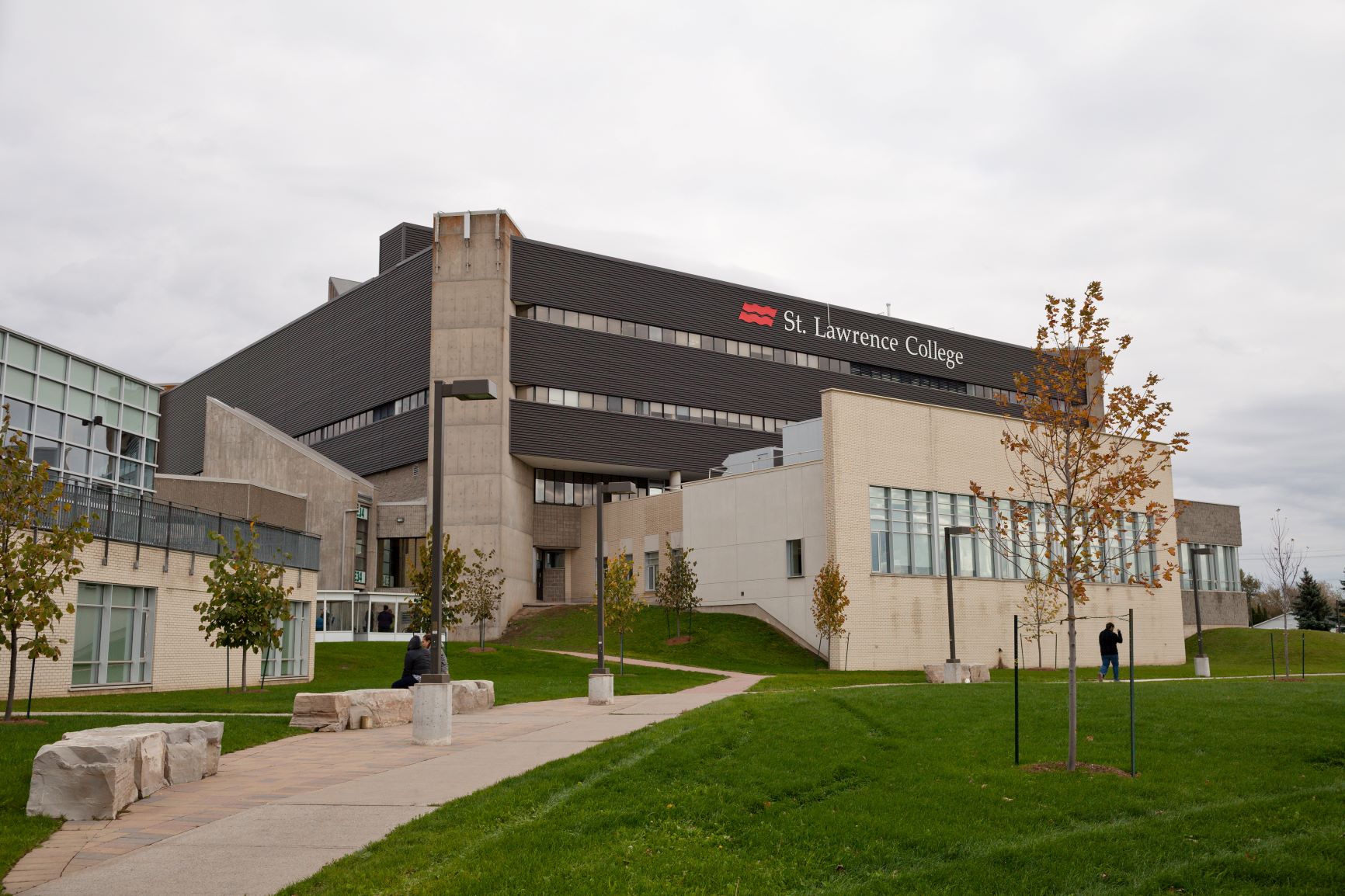
Our Kingston campus has seen significant renovation over the past few years, including a brand new Student Life and Innovation Centre that houses a new gymnasium, fitness centre, cafe, and more.

Career Opportunities
This program is specifically designed for individuals aspiring to work in the electrical field, and graduates can pursue careers in various occupational clusters, including general job titles such as:
- Apprentice Electrician
- Construction Electrician
- Construction Electrician Apprentice Electrician
Graduates may also continue their training via an Electrician apprenticeship at SLC or with another accredited Training Delivery Agent.
Program Contacts
Program Coordinator
Ryan Goff
ELETcoordinator@sl.on.ca
613.544.5400 ext. 1413
Admissions Information
Click here to message Recruitment.