 Indigenous
 Overview
Advances in technology have created unprecedented changes in the automotive industry. These changes have created a demand for a highly skilled workforce in the technical, service, and managerial positions required for this sector.
In response to the automotive industry’s needs, the Motive Power Technician program provides students with a specific range of technical training as well as a range of generic skills required for employment in this rapidly changing industry.
Program Details
Program Highlights
This program is designed and delivered by experienced faculty who have extensive expertise in the automotive industry and who have delivered training to that industry. In addition, the faculty has been involved in the development and delivery of the in-school curriculum for the provincially regulated trade of Automotive Service Technician.
Graduates of Motive Power Technician enjoy the attested recognition of achieving the in-school training of all three levels of the automotive apprenticeship. This means graduates do not need to return to school to complete the apprenticeship training they simply need to complete the practical training hours of work prior to challenging the qualification exam.
Program Outline
2026-2027
This course will allow students to explore the advanced features of word processing, spreadsheet, presentation, and database packages. They will also learn about the integration of data and graphics between these packages.
In this course, learners are introduced to measurement and conversions, fundamental arithmetic and algebra, linear equations and graphs, trigonometry of right triangles, 2D geometry, and elementary statistics. All concepts are presented with real world applications for the technical trades (e.g. welding). This course provides the learner with the mathematics skills necessary to function as a technician (e.g. welder) in trades.
This course provides students with an introduction to shop safety including the use of hand tools, power tools, and hoists and other lift equipment. Additionally, course content focuses on bearings, seals and sealants, precision measuring tools, oxy-acetylene welding and cutting and the use of computers for accessing trade-related information.
Course content focuses on engine fundamentals and the operating characteristics of the internal combustion engine and students are introduced to engine disassembly and reassembly and related manufacturing standards. Cylinder block assembly and applications are covered with students performing inspection and testing procedures. Additionally, crankshaft assemblies are discussed in relation to engine performance.
This course introduces the student to electrical, electronic, electromagnetic, and fuel system fundamentals. Course content focuses on diagnostic test equipment, the operation, inspection and testing of batteries, wiring schematics, and component identification, and circuit repair and protection devices. Intake and exhaust, emission control, and hybrid systems are discussed.
This first course of three on suspension, steering, and brakes provides students with an introduction to suspension assemblies and their components, manual steering and linkage assemblies, and base brake system components and operation. Additionally, students are provided with the fundamentals of tire and wheel repair and servicing according to manufacturers’ recommendations. Air brake adjustment and air brake chamber safety are also covered.
The fundamentals of heating and ventilation systems and the related components, operation, and inspection and testing are covered in this course. Air conditioning principles are also introduced including system types and their operation and service procedures. Repairer rights and responsibilities are covered in detail include provincial statutes and regulations.
This second in a series of three engine systems courses focuses on camshaft and valve train assemblies and their operation, inspection and testing, and related service performance. Engine cylinder heads and their applications and components are discussed and students perform related inspection and measuring procedures. Service and reconditioning procedures are also covered. Course content also focuses on the operation and recommended service procedures for turbochargers and superchargers.
Course content builds on the student’s knowledge of electrical circuit calculations to support the use of diagnostic test equipment. Cranking systems and cranking motor circuits are covered including the disassembly and reassembly of cranking motors and the inspection and testing of circuits. Electronic ignition fundamentals are introduced as are charging systems and control circuits and fuel injection emission control systems.
This course includes inspecting, diagnosing, troubleshooting and repairing front wheel drive axle assemblies, rear wheel drivelines, final drive assemblies and torque converters. Automatic transmissions and transaxles and their operation, components, inspection, testing, and repair are also covered.
In this course, students identify and describe the fundamentals of suspension systems and the purpose and operation of manual and power steering systems. Steering and suspension testing according to manufacturers’ recommendations is performed. Alignment fundamentals are covered including related measurements and the operation of vehicle alignment equipment. Additionally, hydraulic brake servicing procedures on disc and drum brake assemblies are discussed and students complete related performance tasks.
This course provides students with a comprehensive understanding of hydraulic and pneumatic systems, covering both theoretical concepts and practical applications. Students will explore the operation and components of hydraulic pumps, cylinders, and pneumatic systems, learning how these technologies are used in a variety of machinery, including heavy equipment. Through hands-on activities and classroom instruction, students will develop the skills to diagnose, maintain, and apply these systems in real-world scenarios. This course prepares students for careers in industries such as manufacturing, and automotive repair.
This course is designed to teach students how to apply critical thinking concepts to ethical problems. Initially, students learn various aspects of critical thinking and evolve form the knowing stage of critical thinking to the evaluation stage of critical thinking. Students also have an opportunity to explore the ethical process and are exposed to the philosophical aspects of ethical reasoning and progress towards problem solving strategies in relation to controversial issues.
This course provides instruction and practice in college and workplace communication skills with an emphasis on the development of strategies to organize and express ideas in a clear and professional manner. Course work also provides opportunities for the development of students' grammar, research, analytical, reading, and listening skills.
This course provides students with the operating principles that support the inspection, testing, and diagnosing of climate control systems according to manufacturers’ standards. Students are also introduced to body and trim components and their construction, inspection, and repair.
This course covers the operating principles and function of vehicle onboard computer systems including data retrieval and use of appropriate test equipment. The operation, construction, inspection, and testing of supplemental restraint/airbag systems are introduced. Content also focuses on distributor-less ignition systems, computer-controlled charging systems, and power accessories. Gasoline fuel injection systems, diesel electronic injection systems, and emission systems including their inspection and testing are discussed. Students are also exposed to the principles of operation and diagnosis of fuel, electrical drive, and regenerative braking systems associated with hybrid vehicles.
Requirements
Admission Requirements
Ontario Secondary School Diploma (OSSD) with the majority of Grade 11 and 12 courses at the C, U or M level including the following prerequisites:
- Grade 12 English at the C or U level
- Grade 11 Math at the C, U or M level
For OSSD equivalency options, see Admission Requirements.
If you are missing prerequisite courses, enroll in the Career/College Prep program, free for Ontario residents who are 18 years or older.
Fees
2026-2027
Fees are estimates only. Tuition is based on two semesters.
Tuition fees are subject to change pending confirmation of provincial Ministry Funding rates.
Fees are estimates only. Tuition is based on four semesters.
Cornwall
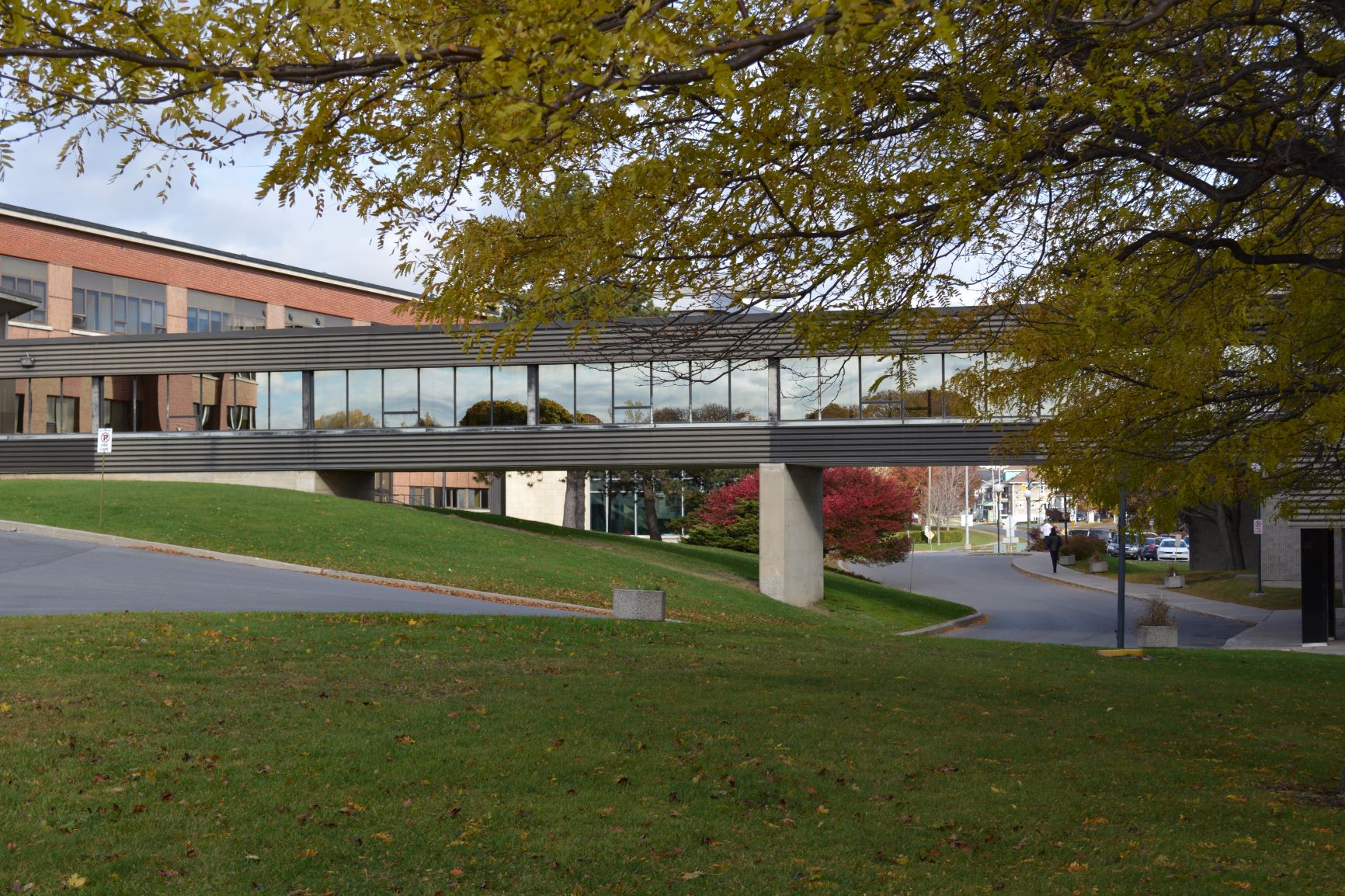
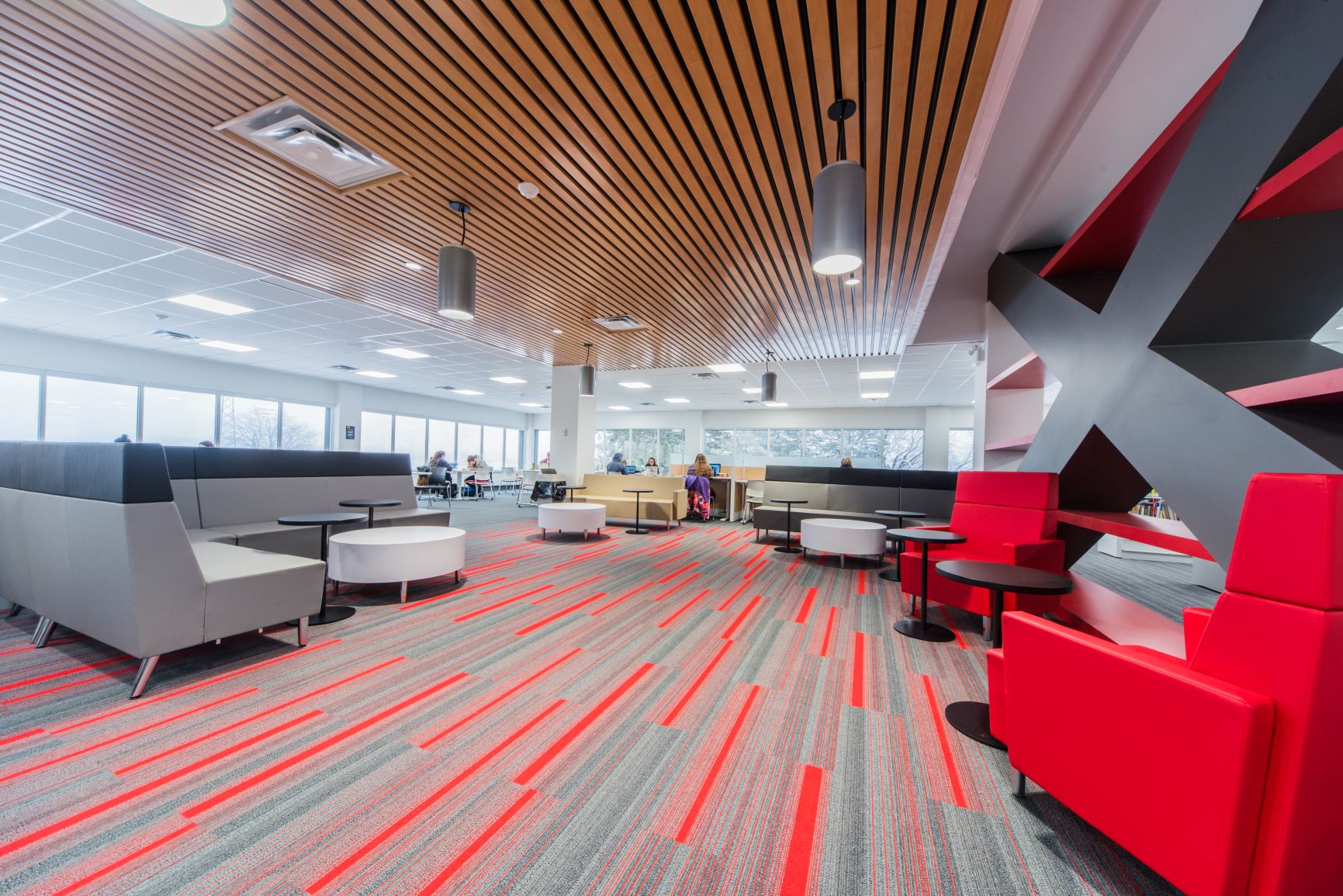
Enjoy waterfront views, modern health labs, a newly renovated library, and vibrant student spaces in our our Cornwall campus.
Career Opportunities
Analysis of the labour market shows that the Province of Ontario is facing skills shortages in the transportation sector. More than half of the new positions created in this industry will be in managerial, technical and skilled trades.
Program Contacts
Admissions Information
Click here to message Recruitment.