 Indigenous
 Overview
The Bachelor of Science - Nursing (Honours) - BScN program at St. Lawrence College (SLC) offers a comprehensive nursing education that prepares students for a successful career in the healthcare field. We are proud to be the first Ontario college Stand Alone Nursing degree to be accredited by the Canadian Association Schools of Nursing (CASN).
Advantages of the BScN program at SLC include early clinical placements starting in the first semester, providing students with hands-on experience right from the beginning. With small class sizes, students benefit from a supportive learning environment and personalized attention from professors and instructors.
SLC has a strong track record of employment after graduation, with many graduates finding employment in their local communities in Eastern Ontario. The program boosts a near 90%- first write pass rate of the NCLEX registration exam. The program has established strong ties with local healthcare agencies, which support student and new graduate employment.
**Note: An accelerated option to complete this program is now available. Details for this will be provided to accepted applicants upon starting their first semester.
Get to know your professors
Learn more about the faculty who teach in the BScN program: School of Baccalaureate Nursing Faculty Profiles
NEW: Ontario Learn and Stay Grant
Students in this program may be eligible to apply to the Ontario Learn and Stay grant.
The Ontario Learn and Stay Grant provides funding for students studying in priority programs in priority communities in Ontario in return for working and caring for people in the region where they studied for a term of service after they graduate.
Click here to learn more.
Program Details
Program Outline
2026-2027
Students explore the theoretical foundations of nursing and the competencies and standards expected within the current nursing profession. Learners familiarize themselves with current Canadian nursing professional organizations, issues, and standards. Students analyze the societal, cultural, and historical influences on nursing practice.
Students construct a foundation of critical reading and writing skills to build upon in degree-level programs. Learners retrieve scholarly literature and write about it in a variety of modes, including personal reflection, description, synthesis and analysis. Current APA style must be applied to all writing.
Students learn an overview of the field of psychology and developmental psychology, with an emphasis on current applications in local and global contexts. Learners examine various perspectives of psychology including neuroscience, development, sensation and perception, learning and memory, motivation and emotion, sexuality, social dynamics, and personality theory. Students will also identify the growth, development, and behavioural changes individuals experience from birth through old age. Students prepare to interact and work effectively with people of all age groups.
Students learn human anatomy and physiology at the cellular, tissue, organ, and system levels of organization. Students learn the integumentary, skeletal, muscular, and cardiovascular systems, with a focus on material relevant for clinical applications.
Students explore concepts related to primary health care (PHC) nursing across the lifespan. Through the exploration of primary health care strategies, including screening programs, education, preventative care, clinical support, case management and navigation, students learn how a PHC focus enables patients, during each life stage, to optimize wellness, reduce the risks of acquiring a chronic disease and to better manage that disease. The course explores how nurses help clients achieve their health goals by implementing evidence-informed practice guidelines and techniques
Learners build competencies required for professional caring as a nurse. Students develop skills in reflection, as an intentional process of thinking, analyzing and learning in various nursing settings and roles. Learners explore the concept of self as a nurse and integrate reflection into their emerging practice. Learners describe, analyze, and apply the therapeutic communication skills required in professional helping relationships. Learners build the skills of relational practice through the development of self-knowing, reflection from a nursing perspective, and fundamental communication skills.
Students explore sociology as the study of social behavior and human groups focused on peoples’ attitudes and behaviours. Students learn how societies are established and change. The concepts, theories, and methods of sociology are examined with respect to Canadian society.
Students learn human anatomy and physiology at the cellular, tissue, organ, and system levels of organization. Students learn the integumentary, skeletal, muscular, and cardiovascular systems, with a focus on material relevant for clinical applications.
Students apply the theory and principles of pharmacology to nursing practice. Skills developed include those related to safe and legal medication administration, patient education, and response to potential adverse reactions. Learners are required to integrate new learning related to pharmacology with prior learning of anatomy and physiology and nursing scope of practice and evidence informed care.
This course focuses on fundamental aspects of human disease. Students learn the structural and functional changes in cells, tissues, and organs altered by disease and/or injury. Important pathophysiological concepts such as cell, injury, inflammation, and immune responses are discussed. Students learn how cancer, and selected diseases impact each of the body systems. There is a focus on etiology and mechanisms of alterations of cells, tissues, and organs that explain patients’ symptoms and signs. There is application of pathophysiological knowledge to nursing practice. Learners are required to integrate new and prior learning.
This course introduces students to the field of microbiology. Students learn about the fundamental aspects of bacteria including structure, classification, microbial growth, and genetics as well as methods of sterilization disinfection. Students discuss epidemiology of diseases, extent of host involvement, and tools of pathogenicity. There is discussion of viruses, fungi and protozoa of medical importance. Students learn about foundational laboratory techniques required for microbiology diagnosis including microscopic identification of bacteria, bacterial culture, Gram staining and antibiotic sensitivity testing.
Students focus on acute and chronic health challenges and have the opportunity to apply the nursing process, demonstrate pattern recognition, increase self-directedness, and participate in delivery of comprehensive care of patients. There is a focus on the practical application of nursing knowledge caring for patients experiencing a variety of acute and chronic health challenges with performance expectations increasing over time across all aspects of the nursing process. Students must demonstrate competent, safe, ethical, and evidence-informed practice. Learners integrate new and prior learning to evaluate evidence and develop individualized care in a competent, safe, ethical, and evidence-informed practice for patients. This is the first of three courses focused on medical surgical nursing across the lifespan.
Students engage in ethical and professional development, with a focus on ethical issues impacting health care. Ethical, professional, legal concepts and theories guiding professional nursing practice are examined. This includes issues of confidentiality, informed consent, new technologies, professionalization and power. Opportunities are provided for learners to examine moral, professional, ethical, and legal nursing knowledge in relation to current practice. Learners are required to integrate new and prior learning.
This course focuses on fundamental aspects of human disease. Students learn the structural and functional changes in cells, tissues, and organs altered by disease and/or injury. Important pathophysiological concepts such as cell, injury, inflammation, and immune responses are discussed. Students learn how cancer, and selected diseases impact each of the body systems. There is a focus on etiology and mechanisms of alterations of cells, tissues, and organs that explain patients’ symptoms and signs. There is application of pathophysiological knowledge to nursing practice. This is the second in a series of related courses, applying concept and skill development to a different set of body systems and processes. Learners are required to integrate new and prior learning.
In this course, students learn the foundational concepts and tests related to statistical analysis. Students use statistical software packages to develop and visualize statistic results. Students learn to communicate foundational statistical results, evaluate the statistical merit of arguments published in research articles, and articulate statistical analysis and its limitations to a variety of audiences.
Students focus on the nurse’s role in meeting the health care needs of childbearing families. Learners acquire an understanding of human growth and development and nursing care of the maternal-child-family unit during the antenatal, perinatal and postpartum period. Learners are required to integrate new and prior learning about nursing processes and practices and apply this to work with the maternal-child-family unit.
This course focuses on the integration of evidence into clinical practice, with a focus on understanding a variety of research methods and concepts related to evidence-based practice. Students have opportunity to initiate nursing research praxis through searching for and critically appraising published evidence. Learners integrate new and prior learning.
In this course, student focus on the social construction of society inequities. Students learn to critically examine health determinates and outcomes, power inequities, and marginalized populations in relation to access and provision of services. Learners are required to integrate the concepts associated with working with diverse populations into their evolving nursing practice.
Students engage in practical applications of community health nursing knowledge related to a variety of community placements sites such as public health agencies, community-based health agencies or non- healthcare settings. Learners work with clients individually, within the family, in groups or across various levels of community. Students must apply knowledge of determinants of health, population health and primary health care principles according to the Canadian Community Health Nursing Standards of Practice and other related standards associated within the placement setting. Students are expected to establish and maintain collaborative community relationships/partnerships and utilize practical experience to move toward independent practice. Students must integrate new and prior learning to demonstrate competent, safe, ethical, and evidence-informed practice.
This course focuses on the essential knowledge, attitudes, and skills nurses need to work with people experiencing mental health challenges. It will prepare learners to meet the entry to practice standards for mental health and addictions areas of practice in a variety of health care settings. Learners will integrate their knowledge of the nurse’s scope of practice with new understandings of the nurse’s role in working with people living with acute or chronic mental health challenges and addictions. Learners focus on developing the mental health nursing role with an understanding of assessment and application of relevant therapeutic approaches. Additionally, they employ critical thinking and evidence-based clinical judgement to plan and deliver safe and professionally competent care for people who are experiencing acute or chronic challenges to their mental wellness and health. Students will identify, appraise, and integrate relevant nursing knowledge through the practical application in chronic and acute health challenges with increasing competencies expected over time. Learners integrate new and prior learning to evaluate evidence and develop individualized care in a competent, safe, ethical, and evidence-informed practice.
Learners will integrate their knowledge of the nurse’s scope of practice with new understandings of the nurse’s role in meeting the health care needs of infants, children and youth. Students apply the principles of family-centred care, employ critical thinking and evidence-based clinical judgement to plan and deliver safe and professionally competent care for pediatrics clients who are healthy and who are experiencing illness
This course focuses on nursing knowledge including historical, philosophical, theoretical, and scientific underpinnings. Opportunities are provided to describe inter-relationships between theory and research grounded in clinical practice, through a knowledge translation approach. Learning experiences require integration of new and prior learning.
Students engage in an in-depth of study in community health nursing. Learners conduct program planning & evaluation, with a focus on population health and a health equity perspective. There is a focus on current and complex issues in population health affecting Canada and other countries. Students engage in practical applications of community health nursing knowledge related to a variety of community placements sites such as public health agencies, community-based health agencies or non-healthcare settings. Learners work with clients individually, within the family, in groups or across various levels of community. Students must apply knowledge of determinants of health, population health and primary health care principles according to the Canadian Community Health Nursing Standards of Practice and other related standards associated within the placement setting. Students are expected to establish and maintain collaborative community relationships/partnerships and utilize practical experience to move toward independent practice. Students must integrate new and prior learning to demonstrate competent, safe, ethical, and evidence-informed practice.
This course focuses on client experiences with complex health challenges. It examines therapeutics and client care required and places an emphasis on clinical judgement and decision-making with performance expectations increasing over time across all aspects of the nursing process. Learners apply the nursing process, demonstrate pattern recognition, increase self-directedness, and participate in delivery of comprehensive care. Students must demonstrate competent, safe, ethical, and evidence-informed practice. Learners integrate new and prior learning to evaluate evidence and develop individualized care in a competent, safe, ethical, and evidence-informed practice for patients. This is the last in a related series of courses and builds on prior learning through application to different medical surgical health conditions across varied care contexts.
In this course, students discuss current issues in population, environmental and global health using a health promotion and upstream thinking approach. Students explore principles and processes related to epidemiology, determinants of population, environmental and global health issues while considering the impact of globalization on specific populations and settings.
Students critically examine nursing knowledge related to a wide variety of chronic, acute and complex health challenges, applying a critical lens and the perspective of a scholarly professional. Learners identify, appraise, and integrate relevant nursing knowledge and increasing competencies in a concentrated clinical experience. Students employ skills necessary for competent, safe, ethical, and evidence-informed practice associated with the role of a novice practitioner. As professionals, students are required to set goals for growth and evaluate their progress in achieving these goals. Through clinical experiences students focus on the critical examination and practical application of nursing knowledge related to a wide variety of chronic and acute health challenges. Students must integrate past learning, set goals for growth, and evaluate their progress in achieving these goals.
Students critically examine nursing knowledge related to a wide variety of chronic, acute, and complex health challenges, applying a critical lens and the perspective of a scholarly professional. Learners identify, appraise, and integrate relevant nursing knowledge and increasing competencies in a concentrated clinical experience. Students employ skills necessary for competent, safe, ethical, and evidence-informed practice associated with the role of a novice practitioner. Students must integrate past learning, set goals for growth, and evaluate their progress in achieving these goals.
Students critically examine current and complex nursing practice issues and trends. Seminar-style group discussions require learners to hone skills specific to the nursing profession’s role in leadership, quality assurance, & resource management within our current and future healthcare system. Students will integrate program knowledge and skills with new learning and skill development associated with advocacy and change facilitation within healthcare. Learners build and reflect on their knowledge as novice practitioners and the impact these issues and trends may have on their professional practice.
Requirements
Admission Requirements
Admission Requirements
Ontario Secondary School Diploma (OSSD) or equivalent with the following prerequisites:
Minimum 75% overall average for six Grade 12U or 12M level courses including:
- Grade 12 English at the U level
- Grade 12 Math at the U level
- Grade 12 Biology at the U level
- Grade 12 Chemistry at the U level
OR
- Completion of a Pre-Health Sciences Pathway to Advanced Diplomas and Degrees program, including St. Lawrence College's Pre-Health Sciences Pathway to Advanced Diplomas and Degrees program (1094) Kingston | Brockville | Cornwall with a minimum 3.00 GPA or 75% overall average
This is a HIGHLY COMPETITIVE program. To be included in the competitive ranking, applications must be complete including all transcripts and proof of enrollment by February 1. Meeting minimum entrance requirements does not guarantee admissions to the program. Please see the Highly Competitive Program Chart for more details.
Facilitated Admission for Indigenous Students Pathway
Each intake, seats are set aside specifically for Indigenous Applicants. Applicants in this pathway must meet the minimum entrance requirements for this program and self identify by completing the following form.
Please note that this form does not substitute as a formal application to St. Lawrence College and applicants must submit a complete application with official transcripts and proof of enrollment through ontariocolleges.ca by February 1st.
Transfer or Advanced Level Applicants
Due to the popularity of the Bachelor of Science in Nursing program and the number of students accepted in first year, there is no space available for applicants with previous degree nursing credits. Applications from students with BScN transfer credits from other institutions will not be accepted and the application will not be processed.
- Are your transcripts from outside of Canada? Please visit Applying to SLC - With Your Transcripts for more information.
Health Requirements
Immunization - Communicable Disease Requirements
For guidance, visit: ParaMed Clearance - St. Lawrence College
Questions: placements@sl.on.ca
As an active SLC student, you are automatically enrolled in a student insurance plan. To understand how this coverage applies to your immunization requirements, please visit:
Fall Intake - September 15
Winter Intake - January 15
Immunization Requirements
All immunizations must be completed and reviewed by a health care provider using the Pre-Placement Health Form:
- TB Screening
- MMR
- Varicella
-
Tetanus/Diphtheria, Pertussis, Polio
- Hepatitis B
- Influenza
-
COVID-19 (as required by Agency)
Students must complete all program- and agency-specific requirements.
Students should aim to complete the following requirements prior to the start of classes:
- Standard First Aid/CPR Basic Life Support for Health Care Providers: must remain valid during the placement periods
-
Vulnerable Sector Police Check: Required; may need renewal every 6 months
- N95 Mask Fit: Must fit approved models (e.g., 1804, 1870, 1860 series)
Requirements may change based on agency or regulatory updates.
For program-specific questions, contact the listed Program Contact(s).
Other Requirements
Computer Requirements
Students are required to have a laptop which is compatible with the college IT systems. Assessment requirements for the School of Nursing are often completed on personal laptops either on campus or at home. Laptops and cell phones can be used in classes at the discretion of the course faculty. There are several online and simulated/virtual learning resources used in this program.
The BScN program strongly recommends the use of a Windows based laptop (for improved functionality during the program and their prevalent use by health care agencies). Students who intend to use a MacOS will have to have the MacOS laptop configured to run Windows based software. When purchasing a computer please consider extended warranties in the event of a system/hardware failure, SLC ITS does not repair personal computers.
Minimum System Requirements
- Windows 11
- MAC iOS 12 or higher
- 14" or larger screen
- 1 or more USB Ports
- Internal Camera and Microphone
- 2-year warranty
- Please DO NOT use a Chrome book or iPad (they are unreliable for the Lockdown Browser)
Additional Hardware Requirements
USB Headphone - can include microphone.
Students require and can download Microsoft suite of programs from the College. See https://apps.sl.on.ca/#
Fees
2026-2027
Fees are estimates only. Tuition is based on two semesters.
Fees are estimates only. Tuition is based on two semesters.
Tuition fees are subject to change pending confirmation of provincial Ministry Funding rates for 2026-2027.
Kingston
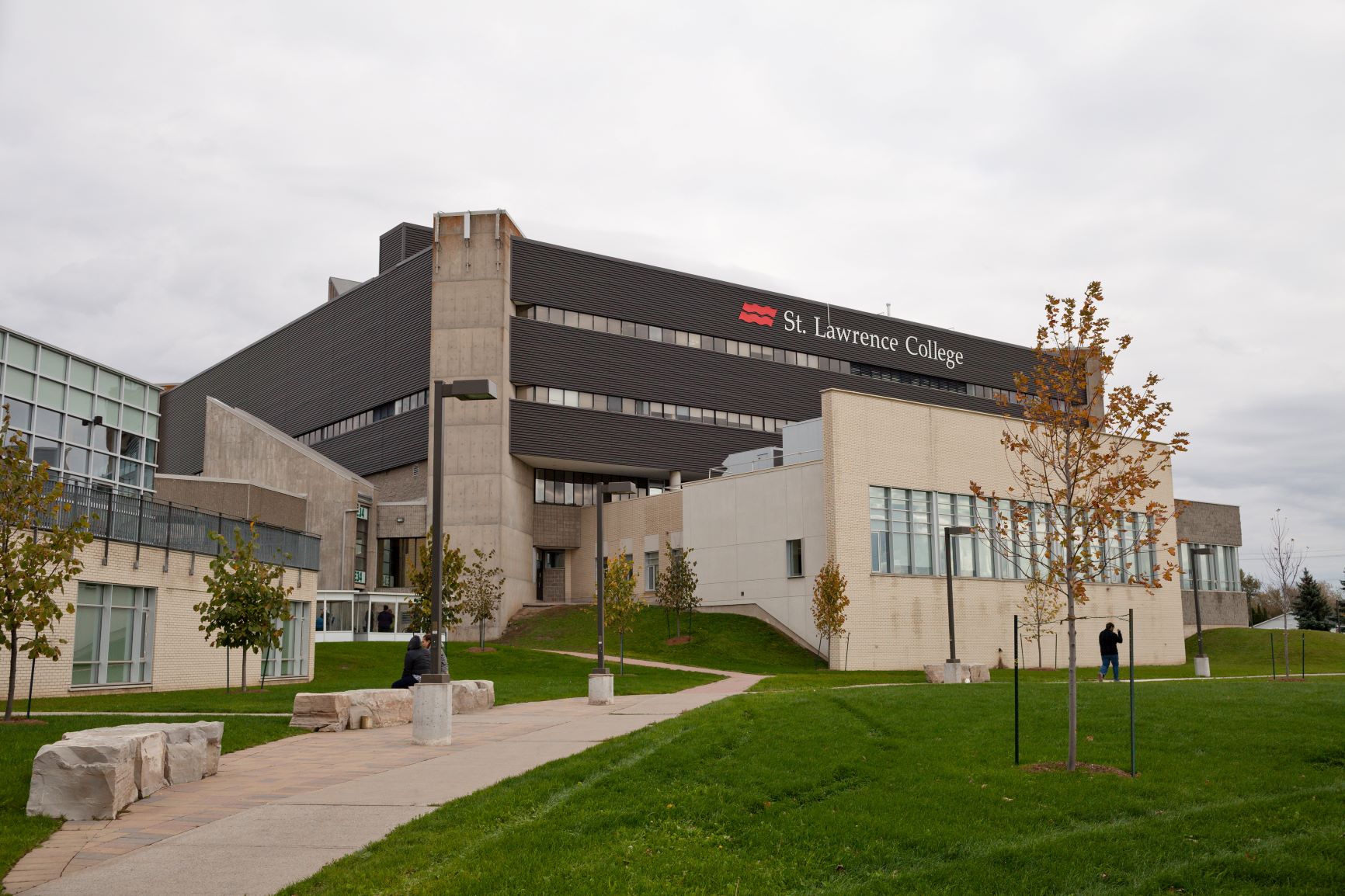
Our Kingston campus has seen significant renovation over the past few years, including a brand new Student Life and Innovation Centre that houses a new gymnasium, fitness centre, cafe, and more.

Career Opportunities
Registered Nurses find rewarding careers in areas such as public and community health, critical care, rehabilitation, long-term care, maternal and child health, medical and surgical nursing, mental health, correctional services, and many more.
Many graduates embark on exciting careers upon graduation, while others pursue further education. It is not uncommon for our graduates to obtain a graduate certificate, a Master’s degree, or a Doctoral degree. Students who wish to pursue graduate studies are encouraged to check the specific admission requirements of the granting body or learning institution they are interested in attending after St. Lawrence College.
Testimonials
Other Information
RPN to BScN Bridge Program
The RPN to BScN Bridge Program at SLC offers a comprehensive nursing education that provides already practicing RPNs the opportunity to complete 7 bridging courses that prepare the learner to enter the BScN program at semester/level 5. Once admitted into BScN via the bridging program, students have 4 years to complete the program.
Program Contacts
Program Contact
Heather McMiller (Year 1 & 2)
hmcmiller@sl.on.ca
Melissa Raby (Year 3 & Year 4)
mraby@sl.on.ca
Admissions Information