 Indigenous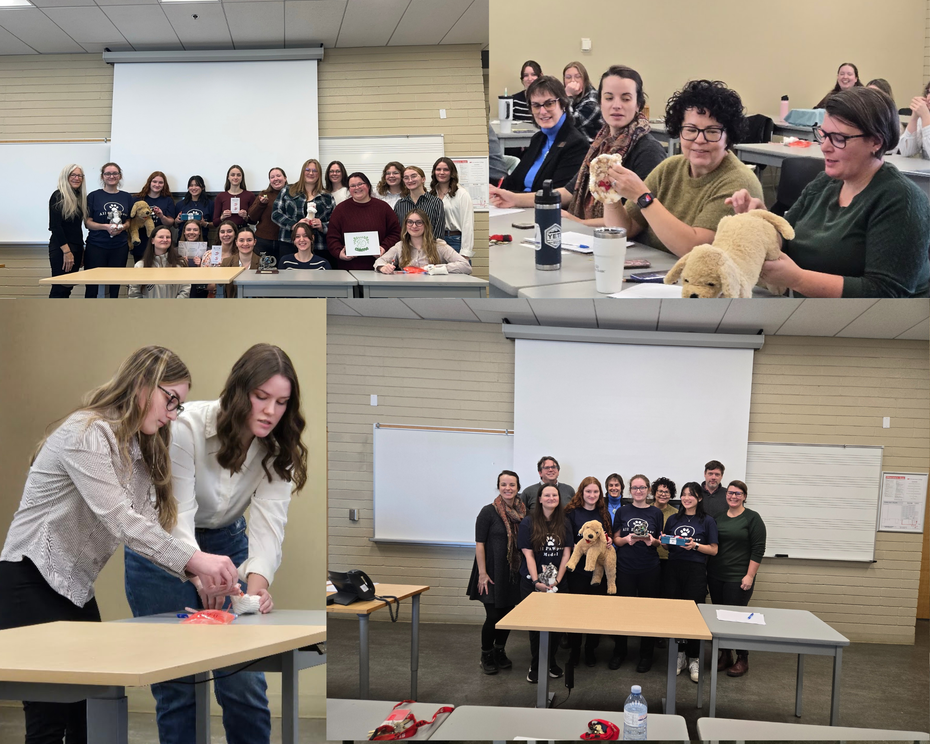
Submitted by Dr. Pauline Smith, Professor and Coordinator, Veterinary Technology
As part of their final course project, third-year Veterinary Technology students were challenged to design a replacement or refinement model for use in the program. The goal was to create innovative tools or approaches that reinforce understanding of key topics and provide opportunities for skill development without relying on live animals.
To showcase their ideas, students presented in a “Dragon’s Den” format, pitching to a panel of dragons. Each team explained how their model would improve skill acquisition while respecting the three R’s: Replace, Reduce, and Refine. These guiding principles in teaching and research involving animals, encouraging educators and researchers to replace animals with alternatives where possible, reduce the number of animals used, and refine methods to minimize stress for the animal.
Student Paige Cameron reflected on the experience:
“This project gave us the opportunity to bring creativity into science. We learned from others and had a lot of fun.”
The presentations encouraged creative thinking and entrepreneurial skills, exposing students to perspectives beyond the veterinary field. Teams had to “think outside the box” to answer tough questions from potential investors.
Student Maya Denton shared:
“This project opened my mind to a wider range of career opportunities after graduation.”
Dragon panelist Shelley Aylesworth-Spink, Senior VP, Academic & Student Success, praised the students’ efforts during the event: “Sitting in the Dragon’s Den with our students was energizing. Their pitches showed real entrepreneurial spark and, more importantly, a deep understanding of what the animal health sector needs. This is applied learning at its best—confident, informed, and future-focused.”
Another Dragon, Jessica Rich, Educational Developer, School of Contemporary Teaching and Learning, highlighted the value of the project:
“The students are tasked with using their critical thinking skills to design an innovative approach to hands-on learning that would replace, reduce, and/or refine the use of live animals for the purposes of learning new skills. It was evident that students enjoyed the process of working together to dream big and imagine how they could help future students learn important skills while also protecting animal welfare.”
Experiences like this one are more than just a final assignment—they represent the integration of knowledge, creativity, and practical skills developed throughout the program. By tackling real-world challenges and presenting to industry professionals, students gain confidence, sharpen problem-solving abilities, and prepare for the collaborative, innovative environments they will encounter in their careers. These projects ensure graduates leave with not only technical expertise but also the adaptability and vision needed to lead in a rapidly evolving field.