 Indigenous
 Overview
A student graduating from the Office Administration - Legal/Health Services program will graduate with two diplomas, Office Administration - Legal and Office Administration - Health Services, opening the door to a variety of employment opportunities in both the private and public work sectors.
This program blends technology, communication, and real-world experience to prepare you for careers in both legal and healthcare settings. Graduate with two diplomas and the ability to step in and make an impact from day one. Prepare to thrive in careers across law firms, medical offices, corrections, hospitals, government agencies, and private organizations.
What You’ll Learn
- The ability to manage workflows, support professionals, and keep organizations running efficiently using the latest tools and industry practices.
- Master industry-standard tools including Microsoft 365 (Word, Excel, PowerPoint, Outlook, Teams, OneDrive) in a fully cloud-based environment.
- Work with specialized legal and medical software such as PC Law, Teraview, Unity, DivorceMate, TypistApp EMR Software, Adobe Acrobat Pro, and Sage 50.
- Build advanced document production skills, including professional correspondence, reports, and legal/medical documentation.
- Develop strong keyboarding proficiency, reaching 50–60 GWPM, to meet real workplace expectations.
- Learn to collaborate in digital environments, managing shared documents, virtual meetings, and team communication through platforms like Microsoft Teams.
- Gain hands-on experience with scheduling, records management, and office systems used in both legal and healthcare settings.
Career-Ready Skills That Set You Apart
Today’s employers are looking for more than technical ability - they want professionals who can think ahead, communicate clearly, and adapt quickly. This program helps you build those capabilities through practical, applied learning:
- Communicate with confidence in professional, client, and patient interactions.
- Maintain strict confidentiality and professionalism in sensitive environments.
- Stay highly organized while managing competing priorities and deadlines.
- Think critically and solve problems in real-time workplace scenarios.
- Work effectively both independently and as part of a collaborative team.
- Use AI tools responsibly and ethically to support productivity, decision-making, and professional communication.
- Through hands-on classroom simulations and six weeks of student work placement experience, you will apply your learning in realistic settings.
St. Lawrence College is a member of the AACSB Business Education Alliance. Membership in AACSB, and participation in the Business Education Alliance, does not imply Accreditation.
Program Details
Program Highlights
The role of an office administrator is evolving and so are the opportunities. This program prepares you to step into a variety of rewarding careers in both legal and healthcare environments.
- Learn in a hands-on, applied setting that reflects real workplace expectations.
- Be guided by experienced faculty who bring industry knowledge into the classroom.
- Build advanced digital skills through progressive, practical learning using current tools and technologies.
- Gain confidence working in fast-paced, professional environments where organization, accuracy, and communication matter.
- Develop the ability to adapt to emerging workplace trends and technologies.
- Learn in a supportive, professional environment that helps you grow from your current skill level to career-ready confidence.
- Graduates leave this program not only job-ready, but with a strong sense of professionalism, pride and ready to contribute meaningfully and grow within their careers.
Program Outline
| Semester 1 | Semester 2 | Semester 3 | Semester 4 | |
| September Start |
Fall (September – December) |
Winter (January – April) |
Fall (September – December) |
Winter (January – April) |
2026-2027
This course is designed to provide students with systematic knowledge and skills in computerized accounting and office administration. Students are taught in a hands-on environment to journalize accounts receivable, accounts payable, sales, inventory and payroll transactions, prepare bank reconciliations and calculate payroll.
This course is designed to help students develop and practice the communication skills needed to succeed in college and workforce environments. Emphasis is placed on improving foundational communication strategies-reading, writing, listening, and speaking—and on developing research and critical thinking skills.
Office procedure skills are essential to support the daily operations of an office environment. The course introduces students to the use of office technology, electronic record keeping, and web-based tools. Students develop professional conduct skills through the use of emails, business presentations, and personal time management.
Effective use of a spreadsheet program is essential to working in an office environment. This course introduces students to basic spreadsheet operations. In computer labs, students perform general computation tasks using spreadsheet software to produce business documents within established deadlines.
This course introduces students to the fundamentals of presentation software and the essential skills required for effective presentation delivery in professional settings. Students will explore various presentation software tools, learn how to create visually appealing and engaging presentations, and develop techniques for delivering impactful presentations with confidence. Emphasis will be placed on developing critical thinking, team work, communication, and presentation skills.
Word processing and digital document production skills are essential in today’s professional office environment. This course develops foundational to intermediate-level keyboarding and word processing skills using Microsoft Word within Microsoft Office 365, along with Microsoft Copilot to support productivity, accuracy, and workplace efficiency. Through hands-on practice in computer labs, students create, format, edit, and enhance a wide range of professional business documents while building speed, accuracy, and confidence in timed production settings. Emphasis is placed on workplace-ready document creation, professional formatting standards, and the effective use of modern word processing technology to meet the demands of today’s administrative and office environments.
Office procedure skills are essential to support the daily operations of an office environment. This course develops previously learned skills acquired in OFAD 2 Office Procedures I particularly office technology and communication. Further skills taught and practiced include minute taking, scheduling, records management, travel, and finance.
Prerequisite(s): OFAD2 + OFAD90 + OFAD122
Communication skills, including the appropriate use of social media in a business setting, are essential to working in an office environment. Building on general communication skills learned in the first semester of the office administration programs, students practice producing documents for a business setting including minute-taking. In preparation to seek employment in their field, students learn the essentials of resume writing, cover letters, networking and interviewing.
Prerequisite(s): COMM110 OR COMM34
This course develops the communication, transcription, and document production abilities needed in today’s legal services environment. Students build knowledge of legal terminology while creating, formatting, editing, and proofreading professional correspondence, reports, and office documents to industry standards. Using digital sound files, students complete transcription and document production assignments in timed settings that reflect workplace expectations. Emphasis is placed on accuracy, listening skills, professionalism, document formatting standards, proofreading, and effective written communication in legal administrative settings.
This course introduces students to the foundational knowledge, skills, and professional expectations required in legal and health office environments. Students explore the structure and organization of law firms, medical offices, clinics, and hospitals while developing an understanding of confidentiality, governance, office hierarchy, patient and client care, customer service, and workplace professionalism. Emphasis is placed on professional communication, advanced keyboarding skills, and the development of workplace-ready administrative practices through practical activities and real-world office scenarios.
This course provides an opportunity for students to perform the type of work normally completed by a general office administrative professional. These skills include but are not limited to paper and electronic filing, creation of basic business documents, spreadsheet applications, and other general office responsibilities. Additionally students are expected to conduct themselves as professionals in an office setting by demonstrating appropriate communication skills, working collaboratively and with minimal supervision within a multi-generational and multicultural team, and acting responsibly while completing assigned tasks required for the effective operation of a general office environment.
This course develops the communication, transcription, and document production abilities needed in today’s medical environment. Students build knowledge of medical terminology while creating, formatting, editing, and proofreading professional correspondence, reports, and office documents to industry standards. Using digital sound files, students complete transcription and document production assignments in timed settings that reflect workplace expectations. Emphasis is placed on accuracy, listening skills, professionalism, document formatting standards, proofreading, and effective written communication in health settings.
This course is designed to provide students with practical skills in utilizing application software to create integrated projects that address real-world scenarios. Through a hands-on approach, students will learn how to leverage the functionalities of various applications to streamline workflows, enhance productivity, and produce professional-quality projects.
Medical terminology is essential to working in a health services environment. Students identify and analyze medical terms to understand their meaning and to demonstrate correct use.
Every health services environment is a business office and requires clear-cut and easy-to-follow routines for its smooth and effective operation. The health services office revolves around patients and health care professionals. Students learn how to handle incoming and outgoing mail, schedule appointments, respond to written and oral requests for documentation, create, maintain and distribute patient charts, and practice effective use of the telephone. The importance of confidentiality and a code of ethics in a health services environment is also discussed.
Prerequisite(s): OFAD2 + OFAD3 + OFAD122 + OFAD123
Legal office practices and applications are essential for working in a legal services environment. Students apply business and legal concepts in the production and formatting of legal correspondence and documents including civil litigation and estate procedures.
Prerequisite(s): OFAD2 + OFAD3 + OFAD122 + OFAD123
In this course, students examine professionalism, self-growth, communication skills, and career readiness. Learners will explore various careers in the field and the intersections of technical and personal competencies required for each. Students will gain skills that support them in job evaluation for their transition from college to the workplace.
This course enables students to apply advanced office administration skills in a real-world setting through a supervised placement in a general, legal, or medical office. Students perform administrative tasks such as document preparation, electronic filing, scheduling, correspondence, data entry, and use of industry software while following organizational policies and maintaining confidentiality. Emphasis is placed on professionalism, effective communication, time management, problem solving, and teamwork. Successful completion enhances workplace readiness and supports transition into professional administrative roles
This course is designed to help students succeed in today's workplace. Job search transition, self-advocacy, goal setting and career planning are essential components of career success. Students have the opportunity to utilize various self-assessment tools and techniques to formulate plan of action for a career in office administration demonstrated through a variety of assessments.
Medical terminology is essential to working in a health services environment. Students learn to instinctively integrate correct medical language in the production of paper and electronic health records and documents in a health services environment.
Prerequisite(s): OFAD8
This course is designed to provide students with practical skills in utilizing application software to create integrated projects that address real-world scenarios. Through a hands-on approach, students will learn how to leverage the functionalities of various applications to streamline workflows, enhance productivity, and produce professional-quality projects.
This course builds on foundational medical office knowledge by developing advanced skills in medical and hospital procedures. Students gain practical experience in building and maintaining patient charts, transcribing physician orders, supporting scheduling processes, understanding hospital environments, applying pharmacology fundamentals, and working within EMR systems across healthcare settings. Through hands-on and simulated activities, students manage patient records, support clinical workflows, and apply accurate terminology and formatting while maintaining confidentiality and ethical standards. Emphasis is placed on communication skills, professionalism, and teamwork. Successful completion prepares students for advanced field placement and administrative roles in healthcare environments.
Legal office practices and applications are essential for working in a legal services environment. Students will apply business and legal concepts, using specialized software, in the production and formatting of legal documents in the areas of family, corporate, and real estate law.
Prerequisite(s): OFAD122 + OFAD123 + OFAD148 + COMP1018
This course provides an opportunity for students to consolidate their office administration skills by performing the type of work normally completed by a specialized office administrative professional. These skills include but are not limited to paper and electronic filing, creation of specialized business documents, spreadsheet applications, intermediate financial accounting, and other office responsibilities. Additionally students are expected to conduct themselves as professionals in an office setting by demonstrating appropriate communication skills, working collaboratively within a multi-generational and multicultural team, and acting responsibly while completing assigned tasks within deadlines required for the effective operation of a specialized office environment.
This course provides hands-on training in medical billing practices across healthcare settings, including OHIP, uninsured services, private and third-party billing, WSIB claims, and extended coverage programs. Students learn to complete the full billing cycle, from health card validation and service identification to claim submission, reconciliation, and error correction. Using industry-standard resources and EMR systems, students develop skills in accurate code selection, compliance, and fee recovery. Emphasis is placed on accuracy, ethics, confidentiality, and communication. Successful completion prepares students to manage complex billing processes in medical offices and healthcare environments.
Requirements
Admission Requirements
Pre-Placement Health FormOntario Secondary School Diploma (OSSD) with the majority of Grade 11 and 12 courses at the C, U or M level including the following prerequisites:
- Grade 12 English at the C or U level
- Grade 11 Math
For OSSD equivalency options, see Admission Requirements.
If you are missing prerequisite courses, enroll in the Career/College Prep program - free for Ontario residents who are 18 years or older.
- Are your transcripts from outside of Canada? Please visit Applying to SLC - With Your Transcripts for more information.
Health Requirements
Immunization - Communicable Disease Requirements
You must complete the Pre-Placement Health Form as a condition of your placement. THIS FORM IS YOUR RESPONSIBILITY
Completed forms are to be uploaded via Placement Pass by ParaMed. To learn more, please visit our ParaMed information page.
Questions can be directed to placements@sl.on.ca.
As an active SLC student, you are automatically enrolled in a student insurance plan. To learn more about how this applies to your immunization requirements please visit www.wespeakstudent.com (domestic) or www.guard.me (international).
Other Requirements
- Co-op Work Permit (For All International Students Only - students must have this document with proper remarks to begin their placement. If you have any questions, please email isa@sl.on.ca)
Technical Requirements
- Students will be working in computer labs during their regular scheduled classes. In order to attend virtual classes or complete homework outside of on-campus delivery, students will be required to have the following technical equipment at home:
- Windows Personal Computer (Laptop or PC) (Mac computers are not compatible with all software applications)
- Webcam and Microphone
Placement
Student work placements are designed to provide an opportunity for the student to take what they have learned in the classroom and apply it to an office. This is considered to be one of the most valuable experiences that the student will have during their time at SLC. Students build relationships, deal with clients and patients, and this can often lead to career opportunities upon graduation.
Students are expected to complete a total of three 2-week placements over the two-year program and are prepared by faculty to help secure their own community placements in order to increase their networking and communication skills. All placements are reviewed and approved by faculty. Some placement agencies may require a student to submit a resume and participate in an interview prior to confirmation of placement.
Students will be required to complete a variety of placement training modules, Student Declaration/Oath of Confidentiality and may be required to complete a series of immunizations (see above under "Health Requirements") and/or CPIC - Vulnerable Sector screening, depending on the placement agency's requirements.
Students will be supervised by a faculty member while on placement and faculty will be in communication with the placement agency throughout the student's placement. The placement agency will complete and submit a final placement evaluation on the last day of placement.
An SLC Pre-Placement Planning Coordinator will notify the placement agency of any specific requirements prior to securing a placement and will provide placement agencies with the required placement documentation.
Some of the most valuable placements in the Kingston community include St. Lawrence College, Queen's University, local hospitals, law firms, Corrections Canada and a variety of other government institutions, provincial and federal courts, non-profit organizations, doctor and dental offices etc.
Questions:
Email: placements@sl.on.ca
Website: www.stlawrencecollege.ca/placement
Fees
2026-2027
Fees are estimates only. Tuition is based on two semesters.
Fees are estimates only. Tuition is based on two semesters.
Kingston
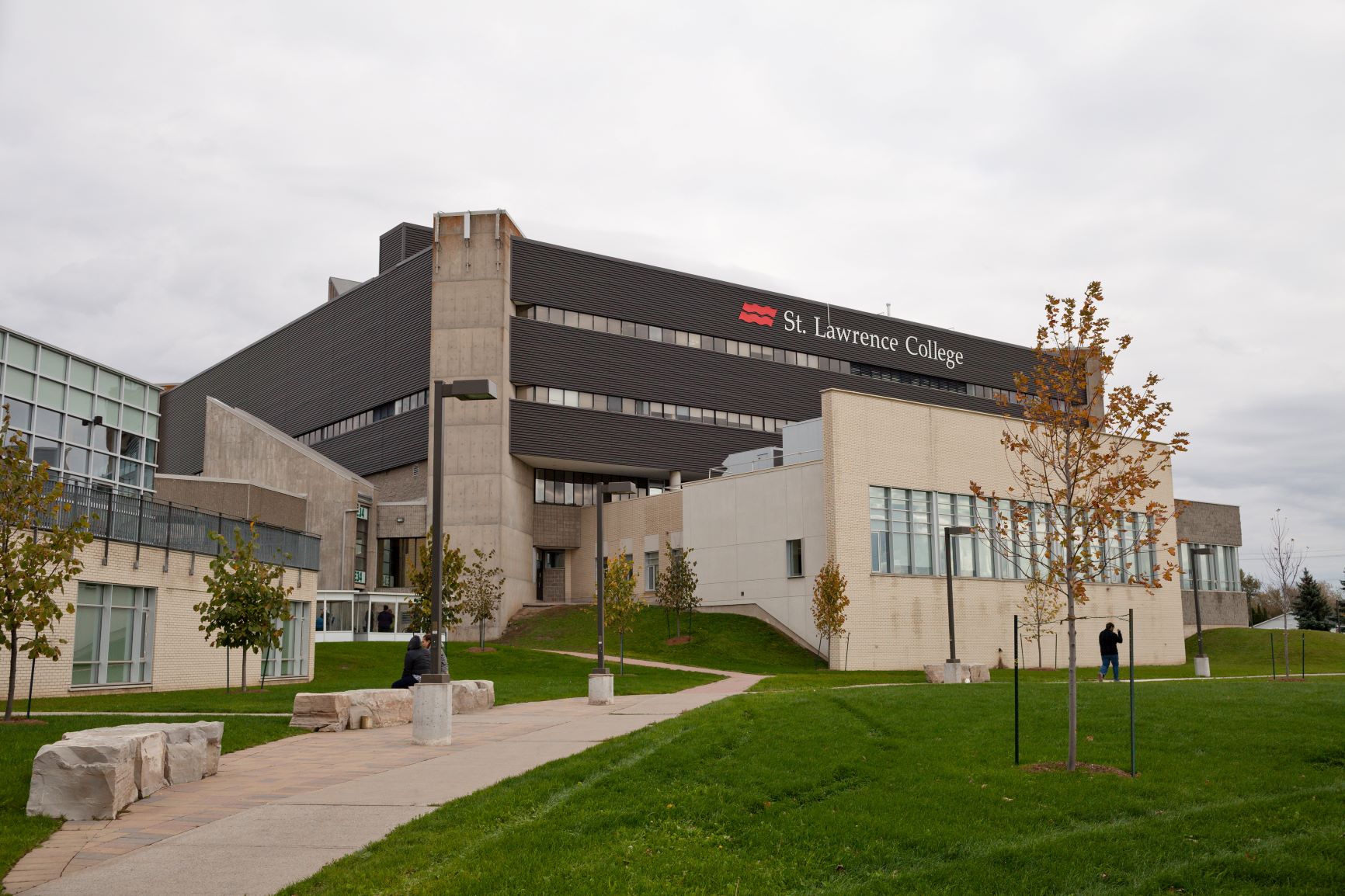
Our Kingston campus has seen significant renovation over the past few years, including a brand new Student Life and Innovation Centre that houses a new gymnasium, fitness centre, cafe, and more.

Career Opportunities
Graduates launch careers across a wide range of legal and healthcare environments, stepping into roles that are in demand and built for growth.
In the legal field, graduates work as legal assistants supporting areas such as real estate, family law, civil litigation, and wills and estates within law firms, courts, government, corrections and corporate legal departments.
In the health services field, graduates take on roles as medical office assistants, unit clerks, patient coordinators, clinic administrators, and health records professionals in hospitals, clinics, and community health organizations.
With a strong, transferable skill set, graduates are also prepared for roles such as executive assistants, office coordinators, and administrative professionals with clear pathways into advanced and specialized positions in both legal and healthcare settings.
Testimonials
Program Contacts
Program Contact
Melinda Vanzanten
MVanzanten@sl.on.ca
613-544-5400, ext.1946
Admissions Information
Click here to message Recruitment.