 Indigenous
Overview
There are few careers as exciting, creative, and uniquely challenging as Advertising. We train students to deeply understand the consumer psyche and develop marketing communications messages that reach and influence target consumers. Are you a “people person”? Do you love digital media and all things online? Are you a strong communicator who likes ideas, persuasion and the creative side of business? Advertising may be for you. Read on…
This program includes amazing experiential learning opportunities and small class sizes that prepare students for an exciting career in advertising and marketing communications, where there are labour shortages in major markets. This means a wealth of job opportunities!
Our Learning Extends Past the Classroom:
- FUSE Mentorship Program
- Community client work
- Case competitions
- Career matching
- Greg awards
- Degree completion
- International exchange opportunities
- Disney internship
Your skills will be developed in an Apple-based communications center with access to the latest industry software including MAC OS applications, Final Cut Pro digital video editing software, Microsoft Office for Mac, and the Adobe Creative Cloud suite of applications.
St. Lawrence College is a member of the AACSB Business Education Alliance. Membership in AACSB, and participation in the Business Education Alliance, does not imply Accreditation.
Program Details
Program Highlights
You will be exposed to and practice the complete realm of advertising communications: creative planning and media buying, direct response and digital advertising, and content development including blogging and video production. You will prepare advertising campaigns for real clients that embrace all elements of communications. You will learn how to evaluate and recommend various marketing communications solutions to resolve business problems. Additional hands-on practical experience is gained from our innovative student-run Ad agency (6th semester) where students assume agency staff roles and devise integrated campaigns to meet client needs.
Would you like to:
Email a grad of our program or a current student? Sit in on a class? Simply email tbrennan@sl.on.ca with your request. We are here to answer any of your questions.
Program Outline
2026-2027
This course provides instruction and practice in college and workplace communications skills, with an emphasis on the development of strategies to organize and express ideas in a clear and professional manner. Emails, memos, letters, short reports, and essays are used to develop effective writing skills suitable to a variety of audiences. Course work also provides opportunities for the development of students’ grammar, research, analytical, reading and listening skills. American Psychological Association (APA) format and documentation is introduced.
In this course, students learn the computer skills and software programs necessary to be an effective communicator in the field. Learners produce persuasive presentations, build budget sheets, and fine tune report writing skills. Students also create blogs and work to develop a professional digital presence. Finally, learners develop organizational and time management skills through a Personal Information Management (PIM) system.
In this course, students examine the role, influence, and importance of media today and the ways in which the media influences various segments of societies. Learners study how various types of media and the elements in marketing communications are combined to reach intended audiences. Students research different areas of media, analyze the strategic value of different types of media, and present their findings.
In this course, students learn the fundamentals of marketing communications and the various components of the marketing communications mix. Learners examine the relationships between various forms of communications and how organizations might use them individually and collectively to resolve business challenges. Finally, students develop an integrated marketing communications solution and a coordinated plan.
In this course, students learn the fundamentals of marketing with a focus on the formulation and management of integrated marketing strategies that play a role in achieving organizational objectives. Learners examine the role of marketing in society and develop an enhanced awareness of the marketing process. Students also study the consumer market for goods and services, and the major decision areas of marketing (e.g., identifying and selecting targets, product, price, distribution, and marketing communications).
In this course, students examine professionalism, self-growth, communication skills, and career readiness. Learners will explore various careers in the field and the intersections of technical and personal competencies required for each. Students will gain skills that support them in job evaluation for their transition from college to the workplace.
Learners explore individual behaviour and environments in organizations, including such topics as perception, attitudes, work motivation, prevention, and wellness. The study of group dynamics is also addressed, including such topics as team building, leadership, and decision-making. Students also look at organizational structure, culture and change.
In this course, students learn the basic requirements for the development of visual communication materials in the advertising and marketing industry. Learners nurture creative thinking and visual communication skills through the use of current industry layout and design digital tools.
In this course, student refine their communication skills for the field with specific emphasis on writing for business and how to read and write persuasively. Learners create advertising copy; write reports, proposals, and effective digital communications; and use technology appropriately in business communications. Students learn how to research topics through traditional means and by searching the Internet.
In this course, students learn the fundamentals of the advertising industry and the role that advertising plays in achieving marketing and business objectives. Learners examine client-agency relations, fundamentals of strategic planning, creative planning, media planning, and advertising research. Students explore core advertising concepts through industry-focused learning experiences and assessments. In this course, students learn the skills to create marketing communications copy for print, audio, video, and digital media. Learners explore the fundamentals of copywriting and the creative ideation process for print, script writing, and digital copywriting. For example, students practice the building of marketing communications themes and slogans through creative thinking and planning processes. Finally, student teams develop a series of marketing communications materials based on a creative brief and advertising plan for a client.
In this course, students learn why people and organizations buy goods and services, when and where they buy them, how they use them, the frequency with which they purchase them, and the decision-making processes they follow. Learners also explore how to analyze consumer behaviour information to predict customer actions, determine the needs of target markets, and understand how customers perceive and understand marketing information. Finally, students make the connection between customer behaviour principles and the elements of marketing strategy.
In this practical application course, students learn introductory digital publishing, how to develop materials for traditional and social media marketing, and how to manage and plan marketing campaigns with clients. Learners create effective marketing communications projects using current industry layout, design, and photo editing software such as Adobe Creative Suite.
In this course, students explore their core strengths and values and use them to refine their career vision. Learners also practice and apply verbal and written communication skills necessary for a successful career search. Students will leave the course with a career portfolio to use with prospective employers that includes evidence of proficiency in presentation skills and the development of professional career search materials.
In this course, students learn conventional and digital elements of direct marketing management including list management, fulfillment, creative strategy and execution, testing, and calculating the expected profitability of the direct marketing campaign utilizing a variety of interactive strategies to entice consumer conversion.
In this course, students learn essential research techniques necessary for marketing communications problem-solving. Students apply this knowledge in a hands-on project to define a research question, assess and design methods to collect relevant information from primary and secondary sources, manage data collection, analyze data, and transform the data into findings and recommended actions. Learners also explore media research data and analytics from a variety of industry sources and platforms.
Modern creative agencies require effective teamwork to manage projects and cultivate client relationships. This course emphasizes collaborative skills to prepare students for diverse agency roles. You will learn how to document client objectives and strengthen partnerships through professional practices. Utilizing project management principles and approaches, you'll understand how tools and techniques can be deployed at various stages of the project lifecycle to meet customer requirements. By the end of this course, you will prepared to develop and deliver project artifacts including client-facing plans, reports and presentations.
In this course, students learn introductory skills in client relations and video production and integrate their skills to complete a product that aligns with client marketing and business objectives. Learners assess client needs and produce custom videos that will used to execute various marketing communications strategies. Students also produce a variety of video materials using current industry tools such as mobile production and online content software. Finally, students learn the basics of shooting and editing videos for specific advertising purposes.
In this field placement course, students apply and develop many learned skills by working as a marketing communications specialist. Learners prepare for the professional environment they will enter upon graduation. Students research, secure, and confirm a work placement position in a marketing or advertising department or with a professional doing marketing communications related work, with approval by the instructor.
In this course, students examine and evaluate all forms of traditional and digital paid advertising media in consideration of client needs. More specifically, learners explore the planning, pitching, and analyzing of a blended advertising campaign. Students execute a tailored digital advertising campaign on a small budget using a combination of display, video, audio, sponsored, native, social media, search, or programmatic on various platforms. Finally, students manage advertising performance, analyze results, and recommend tactical revisions to optimize future campaign results.
This course is designed to teach students how to apply critical thinking concepts to ethical problems. Initially, students learn various aspects of critical thinking and evolve form the knowing stage of critical thinking to the evaluation stage of critical thinking. Students also have an opportunity to explore the ethical process and are exposed to the philosophical aspects of ethical reasoning and progress towards problem solving strategies in relation to controversial issues.
In this course, students learn introductory public relations/corporate communications concepts and the role they play in the marketing communications mix. Learners work with real and simulated client challenges to understand how public relations can be used as a cost-efficient and effective way to communicate to the full range of an organization's publics. Students design, develop, and deliver a fully conceived public relations campaign, including the execution of appropriate media relations materials, and delve into organizational case studies to analyze all relevant components of corporate communications.
Pre-requisites: MCOM5
In this course, students learn the search-based marketing tactics and conversion sites development that drive digital marketing strategy. Learners build marketing strategies that use web platforms such as websites, blogs, and/or wikis, and that optimize conversion through both paid and organic search engine marketing (SEM) and search engine optimization (SEO).
Pre-requisites: MCOM30
In this course, students learn skills in content development for digital and traditional media as well as strategies to manage the content marketing process. Learners explore how marketing organizations can produce content that equals in quality to that of media companies. Students learn how they can deliver tangible benefits to prospects and customers by offering relevant content that helps produce solutions to some of the toughest problems their prospective buyers are facing.
In this course, students refine their video design and production skills through the development of video marketing plans and video productions that are associated with strategies learned in other concurrent Advertising and Marketing Communications courses. Learners solve advertising and marketing communications challenges using multiple video strategies and create professional scripts and videos that align with pre-determined target markets with attention to professional quality production values.
Prerequisites: VIDE30
In this course, you will explore the intricacies of the user journey, strategically planning marketing funnels to implement drip campaigns across multiple platforms and incorporating advanced remarketing tactics. You will dive into best practices for collecting, storing, segmenting, and leveraging user data inside of a customer relationship management (CRM) system, ensuring sustained engagement post-purchase.
In this field placement course, students refine their advertising and marketing communications competencies. Learners apply and develop their skills in a field placement position and prepare for work post-graduation. Student’s research, secure, and confirm a work placement position in a marketing or advertising department or with a professional doing marketing communications related work, with approval by the instructor.
Prerequisite: Students must have successfully completed all courses in the first 4 semesters in the AMC/IMC program.
In this course, students learn to run a simulated creative agency and work with a corporate client. Learners will create an advertising campaign strategy and all the related advertising and marketing communications components based on a client briefing. Students work in teams to create an entire advertising and marketing communications plan with sample/proposed executions and present the plan in a final pitch to the client(s). Finally, learners complete an industry-standard certification (e.g., Google Analytics).
Requirements
Admission Requirements
Ontario Secondary School Diploma (OSSD) with the majority of Grade 11 and 12 courses at the C, U or M level including the following prerequisites:
- Grade 12 English at the C or U level
- Grade 11 Math at the C, U or M level
For OSSD equivalency options, see Admission Requirements.
If you are missing prerequisite courses, enroll in the Career/College Prep program - free for Ontario residents who are 18 years or older.
- Are your transcripts from outside of Canada? Please visit Applying to SLC - With Your Transcripts for more information.
Fees
2026-2027
Fees are estimates only. Tuition is based on two semesters.
Fees are estimates only. Tuition is based on two semesters.
Kingston
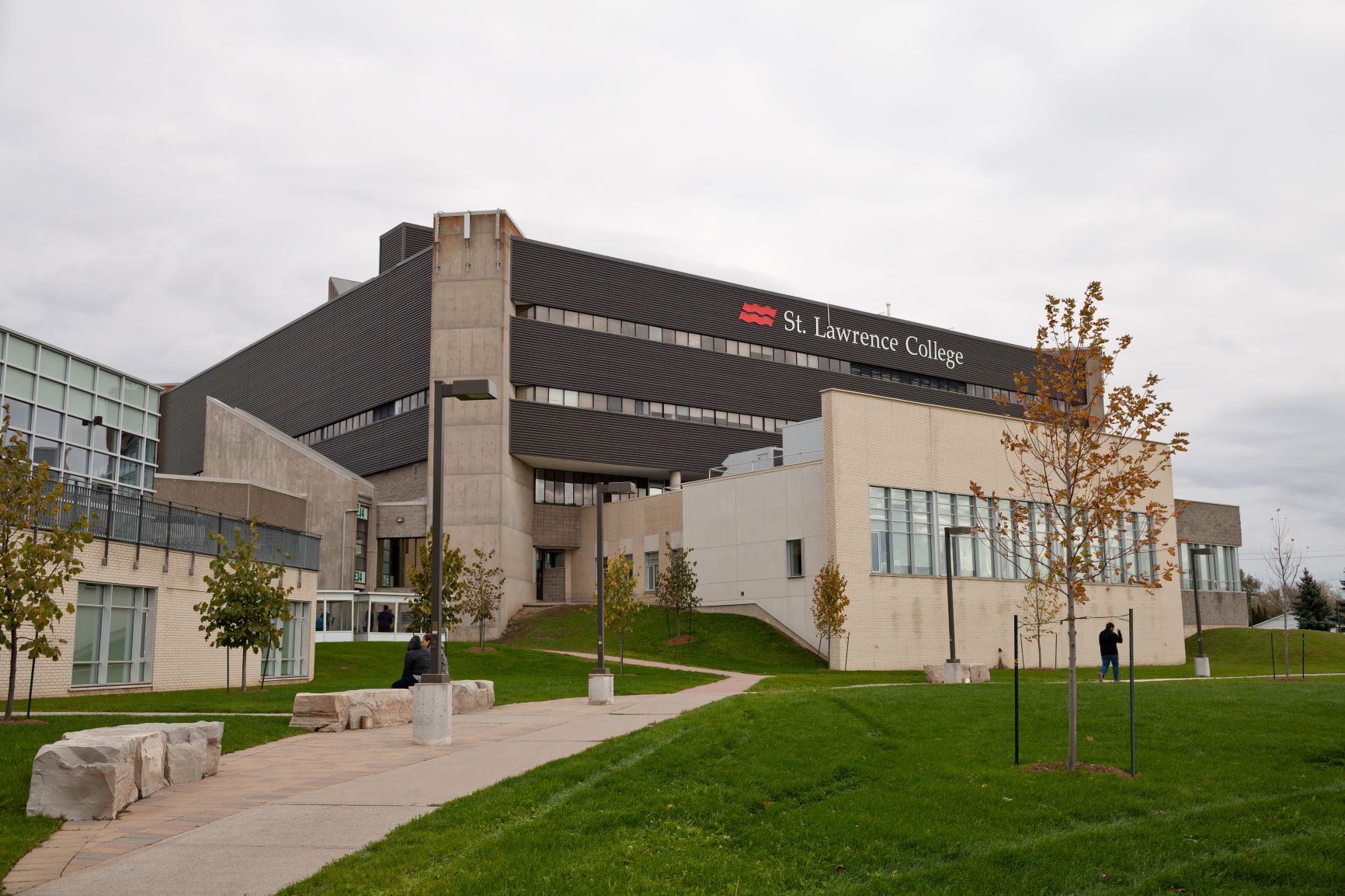
Our Kingston campus has seen significant renovation over the past few years, including a brand new Student Life and Innovation Centre that houses a new gymnasium, fitness centre, cafe, and more.

Career Opportunities
The skills learned are adaptable to any industry and are in high demand. Graduates find employment in diverse areas, including: advertising agencies, and on the client-side with big brands, corporations, small businesses, and in the not-for-profit sector. Occupations include: Marketing Communications Coordinator, Copywriter, Social Media Community Manager, Media Sales Rep, Client Services, Digital Marketing Coordinator, Blogger, PR Coordinator, Event Planner, and more.
Other Information
Programs at St Lawrence College are delivered using a variety of instruction modes. Courses may be offered in the classroom or lab, entirely online, or in a hybrid mode which combines classroom sessions with online learning activities. Program delivery can be run weekdays, weekends or evenings. Upon registration, each full-time student is provided a St. Lawrence email account which is used to communicate important information about program or course events.
Advanced Standing
Applicants with post-secondary credits may be eligible for direct entry to an upper level of the program (semester or year) depending on transfer credits. Select the applicable level when applying at ontariocolleges.ca and ensure that we receive your official post-secondary transcript for consideration. If you are unsure what level to apply for, please contact the program coordinator.
Note:
The St. Lawrence College of Applied Arts and Technology (“St. Lawrence College”) is currently pursuing an amalgamation with The Sir Sandford Fleming College of Applied Arts and Technology (“Fleming College”), with a proposed effective date of April 1, 2027, subject to approval by the Ministry of Colleges, Universities, Research Excellence and Security. If the proposed amalgamation proceeds, students admitted to St. Lawrence College or Fleming College may ultimately study at, and receive their credential from, the amalgamated institution, which may have a different name than the institution to which they originally applied.
Program Contacts
Program Contact
Kathy Patterson
KPatterson@sl.on.ca
613-544-5400 ext. 6743
Admissions Information