 Indigenous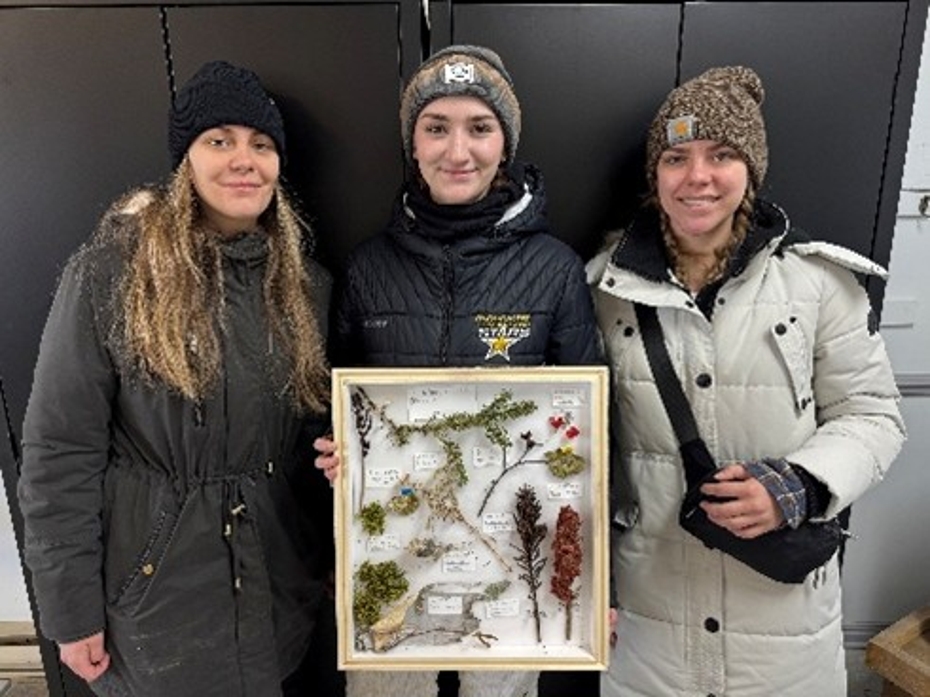
Submitted by Jordan Ann Kevan de Haan, Environmental Technician Program Coordinator
Environmental work isn’t just about working in a lab or out in the field — it’s about helping people understand why that work is important. Recently, first-year Environmental Technician students stepped outside the classroom and experienced environmental communication in action at Cooper Marsh in South Lancaster. This field experience aligned directly with our program’s focus on practical, career-ready communication skills.
As part of our Communication for Environmental Technicians course, we met with Scott Braithwaite, Stewardship and Planning Coordinator, and Claudia Munafo, Public Information Coordinator, from the Raisin Region Conservation Authority (RRCA) to talk about something we don’t always associate with environmental work: intentional messaging.
We asked questions such as:
How do you explain wetland function to a Grade 4 class?
How do you communicate the benefits of riparian zones to a landowner?
How do you design educational signage that gets read?
Students explored how audience, word choice, visuals, and hands-on programming shape environmental understanding. Then they put theory into practice.
Against the backdrop of Cooper Marsh’s cattails and early spring bird activity, students worked in small groups to create interpretive shadow boxes for a travelling educational display using only natural materials gathered on site. Their shadow boxes highlighted themes such as wetland biodiversity and invasive versus native species.
Reflecting on the experience, Anne Charbonneau shared: “This field trip taught me a lot about the types of communication that are used for outreach and general education of the public by the Raisin Region Conservation Authority. I found it interesting to learn about how messages are constructed to be useful and engaging for specific audiences. This will be especially useful knowledge going forward in our careers since effective communication, outreach, and education are important goals for most environmental organizations.”
At its core, environmental work is technical — but it is also relational. Experiences like this prepare our students to become confident communicators in the environmental sector. We are grateful to the RRCA for continuing to show our students that communication is not an add-on skill — it is central to environmental stewardship.