 Indigenous
Overview
The Mechanical Technician program is designed to provide students with the knowledge and skills required to pursue a career as a Mechanical Technician or go on to complete an apprenticeship as a Millwright (Industrial Mechanic), Machinist, CNC Operator/ Programmer, Welder, or other Mechanical Technician related apprenticeship. Upon completion of our program, graduates will receive an Ontario College Diploma as a Mechanical Technician.
Graduates of our program who work in the Mechanical Technician field perform some or all of the following duties:
- Read blueprints, diagrams, and schematic drawings to determine work procedures
- Install, align, dismantle, maintain, repair, and move stationary industrial machinery and mechanical equipment, such as pumps, fans, tanks, conveyors, furnaces, and generators according to layout plans using hand and power tools
- Build or maintain automation work-cells or production lines
- Adjust and maintain machinery and repair or replace defective parts
- Inspect and examine machinery and equipment to detect and investigate irregularities and malfunctions
- Install, troubleshoot, and maintain power transmission, vacuum, hydraulic and pneumatic systems
- Operate machine tools such as lathes, mills, and grinders to fabricate parts
- Program and/or operate CNC milling machines and lathes for use in production of complex components
- Use precise measurement tools (metrology) to inspect and maintain quality control of manufactured or repaired parts
- Perform welding operations in the manufacture or repair of machinery, parts, or manufactured components
Program Details
Program Highlights
Graduates will also have completed the equivalent of all levels of in-school training required for the Industrial Mechanic (Millwright) Apprenticeship program. Completing any amount of the in-school training for apprenticeships is very attractive to employers who may wish to register you in an apprenticeship program.
Program Outline
2026-2027
In this course, students are introduced to metrology, machining, and hand tool theory. This theory course complements the practical projects undertaken in the laboratory. Students learn the foundations of hand tools, measuring instruments, layout tools, cutting tools, drill press, engine lathe, surface grinder, and lubrication use, as well as the safety rules applicable to each.
In this course, students develop the basic welding skills required to join metals. Learners safely set-up and operate oxyacetylene and arc welding equipment to weld, braze, and cut to specifications. Students learn about flat and horizontal welding positions using plate steel.
In this course, students learn the concepts and techniques of producing mechanical drawings using both freehand sketching and conventional drawing as well as computer assisted drafting methods. Learners will interpret and prepare information in a graphical format. Students will practice and apply their learning using industry examples.
In this course, students review elementary mathematical concepts and then topics in algebra and working with equations. Learners are introduced to practical applications of trigonometry and geometry.
In this course, students apply machine shop theory and practice skills at the basic level. Students develop skills related to hand tools, measuring instruments, layout tools, cutting tools, engine lathe, milling machines, surface grinders, and practice current safety rules.
In this course, students learn relevant legislation, occupational health hazards, safety requirements, and protective measures including the use of personal protective equipment in the manufacturing industry. Learners gain knowledge of the safety rules for hand tools, cutting tools, machine shop equipment, lubrication, fire extinguishers, rigging and hoisting, working in confined spaces, and working at heights. Students learn to recognize and prevent unsafe conditions in a team-oriented fashion.
This is a course designed to help students adapt to the rapidly changing workplace. It provides an historical overview of our working society and how it has evolved. Issues such as employment equity, harassment, regulation of health and safety, unionization, professional organizations and codes of ethics are discussed. Students also identify strategies to meet the needs of current employers and to make interview processes work to their advantage.
In this course, students learn mechanical maintenance theory at the intermediate level. Students study theory related to machine tools, power transmission systems, compressors, pumps, valves, bearings, and seals.
Prerequisite(s): MECT101
In this course, students develop intermediate welding skills to join metals. Students further develop their knowledge and ability to safely set-up and operate Shielded Metal Arc Welding (SMAW) equipment and to cut to specifications. Students begin to learn the basics of Gas Metal Arc Welding (GMAW) and Gas Tungsten Arc Welding (GTAW).
Prerequisite(s): MECT102
In this course, student learn to interpret and prepare information in a graphical format. Learners use computer-based applications pertinent to the field of mechanical technology. Students develop their skills through several industry related, hands-on exercises and learn to recognize best Computer Aided Design techniques and practices.
Prerequisite(s): MECT103
In this course, students are introduced to CNC machining. Learners use software to program a two axis Computer Numeric Control (CNC) lathe and a three axis CNC mill. Learners write and interpret accurate code. Finally, students learn when traditional machining might be most effective and efficient and when CNC machining might be best.
Prerequisite(s): MECT103
In this course, students apply mechanical drive theory and practice skills at the intermediate level. Students demonstrate practical skills related to V-belt drives, chain drives, gear drives, fits and tolerances, shaft alignment, and bearings and seals. Students practice and comply with lab safety rules.
In this course, students apply machine shop theory and practice skills at the intermediate level. Students demonstrate practical skills related to hand tools, measuring instruments, layout tools, cutting tools, engine lathe, milling machines, surface grinders and the safety rules applicable to each.
Prerequisite(s): MECT109
In this course, students learn basic physics. Learners study forces, vectors, moments, uniform linear motion, equilibrium conditions, work, energy, power, and momentum. Students apply the concepts and principles of basic physics to mechanical problems.
Prerequisite(s): MECT106
In this course, students learn the concepts of basic electricity and electronics. Learners explore electrical safety, the Canadian Electrical Code, and basic electrical circuits.
In this course students learn trade specific applications as they relate to fluid power. Typical hydraulic and pneumatic systems found in industrial applications are highlighted. Students receive a basic introduction to hydraulic and pneumatic principles, components, symbols and applications.
In this course, students learn the fundamental concepts of quality control and assurance processes. Learners explore application of quality control and quality assurance procedures that meet organizational standards and requirements and support production efficiency and customer expectations. Students practice the identification and analysis of manufacturing errors and associated corrective actions. Learners are introduced to quality tools such as the ISO quality management system.
In this course, students learn mechanical maintenance theory at the intermediate level as it relates to the millwright environment. Students study theory related to industrial machines, power transmission systems, fans and blowers, compressors, pumps, valves, piping systems, and bearings and seals.
Prerequisite(s): MECT201
In this course, students use computer aided drafting skills to produce complex shapes using the advanced features of 3D solid-modeling applications. Students learn the industrial applications of computer aided design (CAD) to create 3D models, sheet metal layouts, and mechanical designs. Students design 3D parts and create prototypes using a 3D printer. Students develop further their skills in 2D concepts, assign data to blocks, and create bills of materials and external references.
Prerequisite(s): MECT204
In this course, students learn to create a series of parts using Computer Aided Machining (CAM) software. Learners also draw and import Computer Aided Design geometry, create a setup sheet, program, setup, operate, manufacture, and inspect a series of parts on both a Computer Numerical Control Mill and a Computer Numerical Control Lathe.
Prerequisite(s): MECT207
In this laboratory course, students practice advanced machine shop skills. Learners practice use of hand tools, measuring instruments, layout tools, cutting tools, engine lathes, milling machines, surface grinders as well as the safety rules that are applicable to each. Students complete individual projects related to manufacturing and repair.
Prerequisite(s): MECT209
In this course, students learn to communicate effectively in a technical context. Learners work to develop verbal and written skills for projects in the Mechanical Technician program such as how to communicate technical information in a variety of formats relevant to the industry (e.g., formal reports and presentations).
Pre requisite MECT105
In this course, students learn the trade specific applications of hydraulics and pneumatics with typical hydraulic and pneumatic systems found in industrial applications highlighted. Students develop skills and knowledge in hydraulic and pneumatic principles, components, symbols, and applications. Learners practice the safety regulations as prescribed by the Occupational Health and Safety Act (OHSA) including the superior cleanliness of hydraulic equipment and systems.
Prerequisite(s): MECT306
In this course, students expand their basic knowledge of electrical and electronic devices, and are introduced to the electrical fundamentals of magnetism, transformers, and AC and DC motors. Students learn to read control schematics, ladder logic, and will be introduced to applications of Programmable Logic Controllers (PLCs).
Prerequisite(s): MECT203
In this course, students are introduced to the advantages and disadvantages of maintenance programs. Students learn vibration terms, vibration measurement, transducer mounting, vibration analysis, and rotating element balancing fundamentals. Learners study the fundamentals of non-destructive testing including, visual inspection, dye penetrant inspection, magnetic particle inspection, eddy current testing, ultrasonic inspection, and oil contaminant analysis.
Prerequisite(s): MECT401
In this advanced level course, students further develop their knowledge and ability to read welding drawings, apply safety rules, layout, measure, cut, tack, weld, and assemble metal components to specification.
Prerequisite(s): MECT202
In this course, students improve their knowledge of manufacturing processes, industrial materials, and process planning and quality control methods. Students engage in classroom and laboratory activities as well as industry field trips as permitted by local companies.
Prerequisite(s): MECT403
This course allows the students to improve their knowledge of manufacturing processes, industrial materials, and process planning and quality control methods. Students engage in classroom and laboratory activities as well as industry field trips as permitted by local companies.
Prerequisite(s): MECT401 + MECT409
In this course students research, disassemble, catalog, diagnose, clean and reassemble mechanical components such as pumps and gearbox assemblies, compressors and valves. Attention to detail and organization as well as safe working habits are key to reassembling components to original state.
Prerequisite(s): MECT409
Requirements
Admission Requirements
Ontario Secondary School Diploma (OSSD) or equivalent including the following prerequisites:
- Grade 12 English at the C or U level
- Grade 11 Math at the C, U or M level
For OSSD equivalency options, see Admission Requirements.
If you are missing prerequisite courses, enroll in the Career/College Prep program, free for Ontario residents who are 18 years or older.
- Are your transcripts from outside of Canada? Please visit Applying to SLC - With Your Transcripts for more information.
Fees
2026-2027
Fees are estimates only. Tuition is based on two semesters.
Fees are estimates only. Tuition is based on two semesters.
Kingston
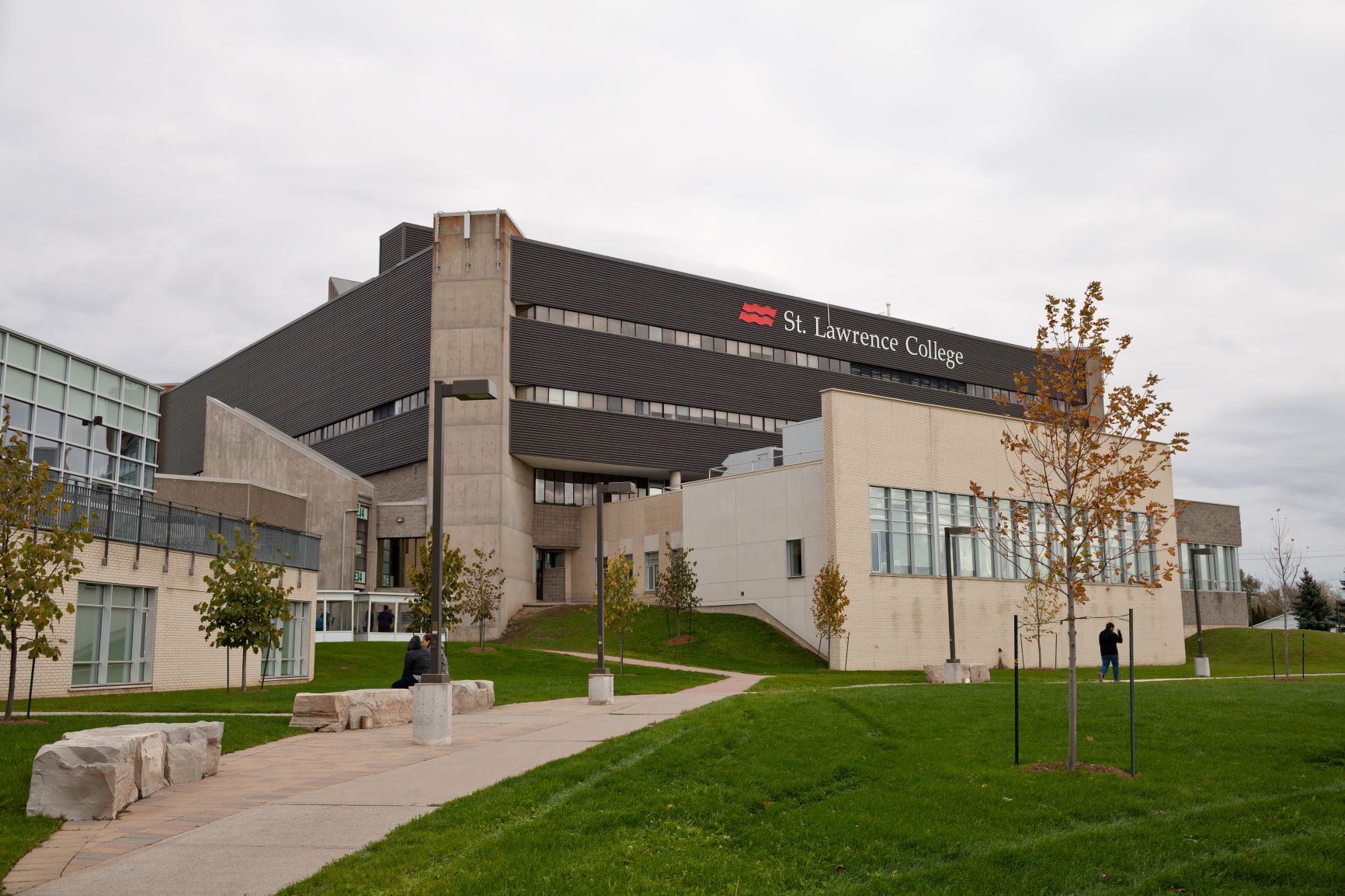
Our Kingston campus has seen significant renovation over the past few years, including a brand new Student Life and Innovation Centre that houses a new gymnasium, fitness centre, cafe, and more.

Career Opportunities
Graduates of this two-year program will work in a broad range of automated manufacturing facilities. Mechanical Technicians perform some or all of the following duties:
- Assist in preparing conventional and computer-assisted designs, drawings, and specifications
- Carry out a limited range of mechanical tests and analyses of machines, components, and materials
- Assist in the inspection of mechanical installations and construction projects
- Perform Quality Control inspections as a Metrologist on manufactured or repaired components
- Participate in the installation, repair, and maintenance of machinery and equipment
- Program and/or Operate manufacturing equipment such as CNC Milling Machines and Lathes
- Fabricate and weld components
- Build and maintain Automation work-cells or production lines
Other Information
Additional Costs
- All students are required to supply their own CSA certified footwear (boots preferably) and safety glasses.
- Students are required to purchase the Millwright Manual and the Technology of Machine Tools textbook for use in the majority of the classes.
- Other textbooks are defined in the course outlines.
- All students are required to purchase a tool kit or supply their own matching tools for use in the labs.
Advanced Standing
High school students who have successfully completed a multi-credit (2 to 3 credits), grade 12 Manufacturing based Technology Design program that includes any combination of the following credits, Technological Design TDM4 or TDJ4M with a minimum overall average of 70% are eligible to receive advanced standing in St. Lawrence College Technical Drawing, MECT 103.
High school students who have successfully completed a multi-credit (2 to 3 credits), grade 12 Manufacturing Technology program that includes any combination of the following credits, Manufacturing Technology Industrial Maintenance, TMI4C, Manufacturing Engineering Technology TMJ4C or Manufacturing Technology for Welding Technician TMW4C with a minimum overall average of 70% are eligible to receive advanced standing in St. Lawrence College Welding and Fabrication I, MECT 102.
Once you have been accepted into your college program, contact your program coordinator for details.
Note:
The St. Lawrence College of Applied Arts and Technology (“St. Lawrence College”) is currently pursuing an amalgamation with The Sir Sandford Fleming College of Applied Arts and Technology (“Fleming College”), with a proposed effective date of April 1, 2027, subject to approval by the Ministry of Colleges, Universities, Research Excellence and Security. If the proposed amalgamation proceeds, students admitted to St. Lawrence College or Fleming College may ultimately study at, and receive their credential from, the amalgamated institution, which may have a different name than the institution to which they originally applied.
Program Contacts
Program Contact
John McGrath
jpmcgrath@sl.on.ca
613-544-5400, ext. 1281
Admissions Information
Click here to message Recruitment.
Scholarship & Bursary
Special Scholarship Opportunity:
Qualified students may be eligible for special financial support, made possible through a generous gift donated to the St. Lawrence College Foundation, from the Advanced Technology Education Consortium (ATEC). For full details regarding the ATEC Technology Scholarships, applicant criteria and application forms, visit Bursaries and Scholarships.