 Indigenous
 Overview
Note: This program is a Fleming College program that is being offered at St. Lawrence College. Students will apply and be accepted to Fleming College, and will study at the St. Lawrence Cornwall campus.
Our graduate certificate will turn your passion for creating more liveable, sustainable communities into a career in Canada’s environmental sector.
Throughout this intense program you will gain:
- Expertise in supporting the planning development of lands according to municipal, provincial and federal legislation and industry standards/procedures
- Practical experience contributing to environmental assessments and environmental impact studies
- Knowledge of industry standards for collection and analysis of water and soil samples in the field to aid in the study and modelling of environmental problems
- The ability to present spatial information using Geographic Information Systems (GIS) applications
- Project management skills as well as negotiation, critical-thinking, and problem-solving skills to achieve goals within land use development projects and associated plans
This high demand skill set will prepare graduates for a wide variety of settings in the public, private or non-profit sectors. This program is specifically designed to support students transitioning into the Canadian environment.
Program Details
Program Highlights
Students in this program will:
- Support the development of plans according to relevant municipal, provincial and federal legislation and industry standards and/or procedures.
- Conduct environmental assessments and environmental impact studies according to relevant municipal, provincial and federal legislation and industry standards and/or procedures.
- Communicate spatial information using Geographic Information Systems (GIS) applications to inform decision making in the environmental planning process.
- Explain environmental policy and planning intentions in a clear and professional manner to various audiences.
- Apply negotiating, critical-thinking, and problem-solving skills to achieve goals within land use development projects and associated plans.
- Recognize and adhere to the unique planning processes of Indigenous communities as related to municipal, provincial, and federal legislation.
- Develop a variety of land use and environmental plans using project management tools and principles to achieve project goals and timelines.
- Apply industry standard procedures for collecting and analyzing water and soil samples in the field to aid in the study and modelling of environmental problems.
- Assess the Canadian landscape for the presence of at-risk species and habitats requiring conservation efforts in accordance with industry and government standards.
- Apply computer file management principles to organize the statistical and geospatial information required for complex decision-making related to environmental planning.
- Integrate a broad knowledge of the Canadian environment, landscape, economic geography, and political systems to inform land use management decisions.
Program Outline
2027-2028
This course provides a background on the structure of government in Canada and Ontario, how laws are established, and the civic processes that govern the country. Designed for students transitioning to Canada, this course also provides an overview of the economic and social geography of Ontario and Canada, and the Canadian learning environment. Legislation, regulations, and ethics introduced in this course will be further explored in LAWS 306.
Being a clear, effective communicator is a key skill in the environmental planning field. Through this course you will continue the development of your written and verbal communication skills and learn how to effectively engage with the public and stakeholders. Through exercises and practical experience, you will demonstrate plain language writing skills, preparation of outreach material, effective presentation development and public speaking skills. You will also enhance your understanding of community engagement and consultation, focusing on understanding the needs of key stakeholders to advance your policy objectives to encourage environmental protection and conservation. This course is specifically designed for students transitioning into the Canadian environment.
This course provides a primer on the use of Windows file management and computer applications including word processing, presentation software, and spreadsheets with a focus on the environmental field. Data visualization and statistics related to the environmental industry will be explored, along with a discussion on appropriate and responsible professional use of social media and ethics. This course is specifically designed to support international students transitioning to the Canadian learning environment and preparing students for employment.
Designed with the diverse experiences of international students in mind, this course explores the history of environmental protection initiatives in Ontario and Canada including waste management, sustainability, and water resource protection. The Canadian Environmental Protection Act is explored along with once-grassroot initiatives that are now woven into the daily lives of Canadians.
Designed specifically for students new to the Canadian environment, this course explores how nature works by studying the Ontario natural landscape including landforms, forests, lakes, rivers, and wetlands. Students will identify and classify the living and non-living components of the ecosystems in the Kawartha Lakes region and develop field skills for working in the Canadian environment. The processes and materials that shape our planet will also be explored with a focus on the dynamic relationship between Earth, climate, and humans.
This course is an introduction to the study of Indigenous (First Nations, Metis, and Inuit) peoples in Canada. Students will explore the complex historical and contemporary relationships between Indigenous and non-Indigenous peoples. The course will also guide students to begin to understand the diversity and depth of Indigenous societies, worldviews, and knowledge through a multi-disciplinary lens.
This course provides students with the opportunity to explore how GIS technology is being used in the field of environmental planning. Hands-on experience using ArcView GIS will allow students to continue to develop their GIS analysis skills. Projects will provide the opportunity to use GIS as a tool to facilitate environmental management and planning including mapping, analysis and decision making.
This course provides students with knowledge of human population growth and the evolution of water and wastewater treatment processes over time. The biology of humans, the impacts of human population growth, and the basic processes of water and wastewater treatment are discussed. Students learn how contaminants move through the environment and the implications of these pathways for source water protection. Relevant legislation related to water quality in Canada will be presented. Students will review case studies on water contamination both in Canada and Internationally.
This course introduces students to the basics of the planning process exploring the roles of various levels of government, the land use planning system in Ontario and the role of land use and environmental planners. In this course students will become familiar with the planning process, the key functions and roles of planners, basic planning techniques and how land use and environmental planning shapes our communities and contributes to sustainability. This course also examines planning practice and ethics through studying the Ontario Professional Planners Institute (OPPI) of Planner Code of Ethics.
Communities receive their authority to regulate planning through Provincial legislation, and in some cases planning decisions are also guided by applicable Federal laws. Environmental planning also involves a wide variety of related environmental legislation and regulations. This course introduces students to the legislation relevant to environmental planners. The role of the courts and tribunals in environmental planning matters will also be discussed.
Environmental planners must have a strong background in understanding ecological features, functions and systems. This understanding is fundamental to conducting site investigations, understanding the ecological context and providing sound advice and recommendations. This course will provide students with an in-depth understanding of the different environmental features and their associated functions, basic habitat and species identification skills and appropriate field technique. This will allow environmental planners to appropriately translate ecological information to planning recommendations.
A how-to course to ease the transition from Fleming's Applied Environmental Planning Program to a Planning internship or career, Skills for Planners will focus on the essential office skills, management tips and electronic etiquette needed to successfully communicate, coordinate and complete Planning Projects in today's working world. Hard and soft skills such as Project Coordination, Problem Solving, Time Management, Technical Writing and Team Building will be included and geared for a successful entry to your first post-graduate position and beyond.
The Soils and Ecosystems course will focus on developing the practical skills necessary to assess the physical, chemical and biological properties of soils and other substrates as they relate to plant growth and distribution. Students will learn how to classify all substrates according to the Ecological Land Classification System of Ontario, but the emphasis will be on mineral and organic forest soils. An understanding of the relationship between substrates and their landform and topography will be a central theme of the course.
Environmental planning deals with the broad, varying landscapes of Ontario. Visiting a place first-hand provides the best understanding of the local environment. This course is a 3-day, 2-night bus trip to explore varied planning landscapes.
Engaged environmental planning is about sustainable change in our communities and how we manage it effectively. Effective and sustainable environmental planning takes into consideration the impact of planning and development on people and the environment. Sustainable community development is a process where community members come together to take collective action and generate solutions to common problems. Community engagement in problem-solving and decision-making using social media and other internet based tools will be discussed as methods to increase community involvement and input. Theories in stakeholder consultation and how these methods and results are considered in the decision making process. A critical skill honed in this course is for the student to be able to take environmental scientific data and explain it so that community members can develop a thorough understanding of the issues being discussed.
Environmental planning cannot be completed properly or ethically without including the Indigenous Community and incorporating the principle of free, prior and informed consent. This course will be taught from an Indigenous perspective that is respectful of culture and Traditional Knowledge. The first part of this course focuses on learning how to properly engage Indigenous communities including providing students with a historic and cultural sensitivity context for effective engagement. The second component of the course involves understanding Traditional Ecological Knowledge and its role in environmental planning.
This course will provide an introduction to the key concepts and issues in the modern practice of environmental planning in Canada, and more specifically, in Ontario. Students will examine the impact of planning for watersheds and natural resources on the development of cities, towns, and rural communities and will also learn the fundamental components of the environmental planning process.
This course emphasizes the theories and concepts regarding planning with consideration for the natural environment and Natural Heritage. Natural Heritage Planning works to maintain, restore and enhance ecologically sustainable and resilient landscapes. The course also explores the methods used to conduct environmental assessments and impacts studies; the role of avoidance, mitigation and compensation; as well as emerging science and topics in such topics as restoration, rehabilitation and offsetting.
This course provides students with the opportunity to explore how geospatial computer applications may he used to advance and support environmental planning processes. Students will gain hands-on experience with ArcGIS collecting, integrating and manipulating spatial and non-spatial data for interpretation and geoprocessing. Final projects will provide the opportunity to use GIS as a tool to facilitate the management of - or solution to - a common environmental planning topic.
This course focuses on building skills that planners need in urban and rural contexts. Using case studies of the most current planning policies, this course focuses on urban design and growth management, including healthy community design, active transportation, mixed use development and affordable housing. It will also focus on planning issues unique to rural areas. Provincial plans and policies will be examined relative to the tools they provide planners to promote efficient and environmental sound growth.
In this course, students will work through a municipal land use planning case study. Emphasis will be placed on the application of current environmental policy, legislation, standards and guidelines. Students will prepare strategies and make recommendations to advance a land use planning process while identifying measures to protect, maintain, enhance and restore environmental features and areas. Various experiential learning strategies will be utilized, such as interactive group work, in-class activities, written assignments and presentations in order to best simulate common industry processes and practices.
Students will work in small groups to execute a project that will help solve a practical environmental planning problem or deliver an environmental land management initiative. Projects will be identified through industry partnerships. Students will develop the methodology that will be used to implement the project and execute the project in accordance with applicable legislation, policy and industry standards. The course is designed to provide students with an opportunity to apply their skills and knowledge learned in the Environmental Land Management program to a practical, 'real life' project.
This course covers the project planning process for your applied project to finish off the program. You will form your project teams, develop a project charter, and devise a project plan.
Students will examine the planning issues related to the design, economics and multidisciplinary requirements of infrastructure development projects. An emphasis on the Environmental Assessment Act and its interactions with other land use planning legislation will be reviewed to engage students in further understanding the Environmental Assessment process in Ontario. Development controls that direct planning of regions and communities will be examined. Students will learn the concepts required to prepare and review large scale municipal and provincial infrastructure development applications. Emerging concepts and challenges within the Environmental Assessment process will also be explored. This will include an emphasis on the principals of sustainable development related to green infrastructure, renewable energy development and sustainable community design.
Requirements
Admission Requirements
A University degree or College diploma in a related field such as biology, ecology, geography, geoscience, engineering, or a related discipline.
Health Requirements
Please email askus@flemingcollege.ca for questions related to health requirements.
Fees
2027-2028
Fees are estimates only. Tuition is based on two semesters. Final fees for the 2027-2028 academic year will be posted in Spring 2027.
Fees are estimates only. Tuition is based on two semesters. Final fees for the 2027-2028 academic year will be posted in Spring 2027.
Cornwall
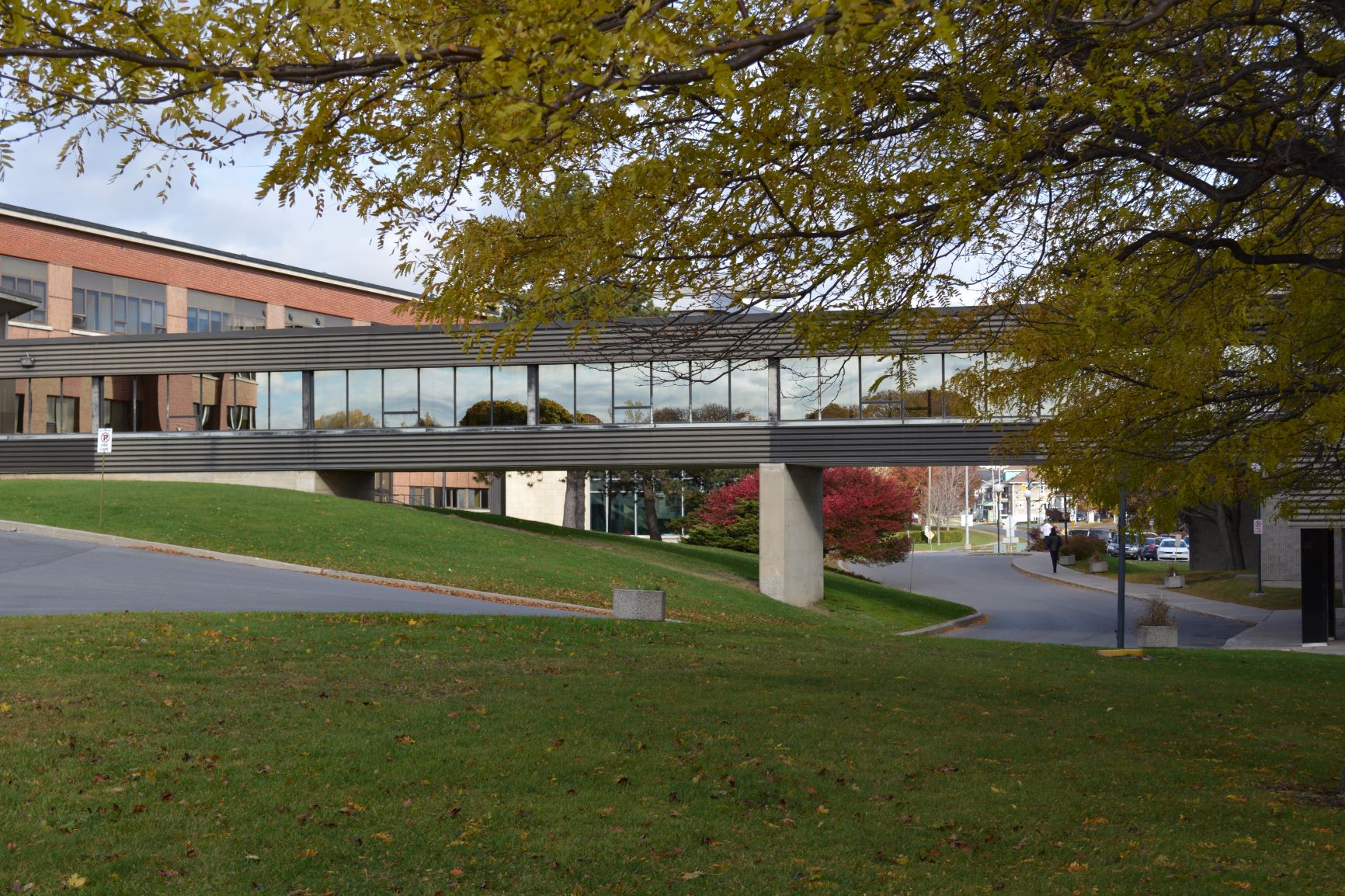
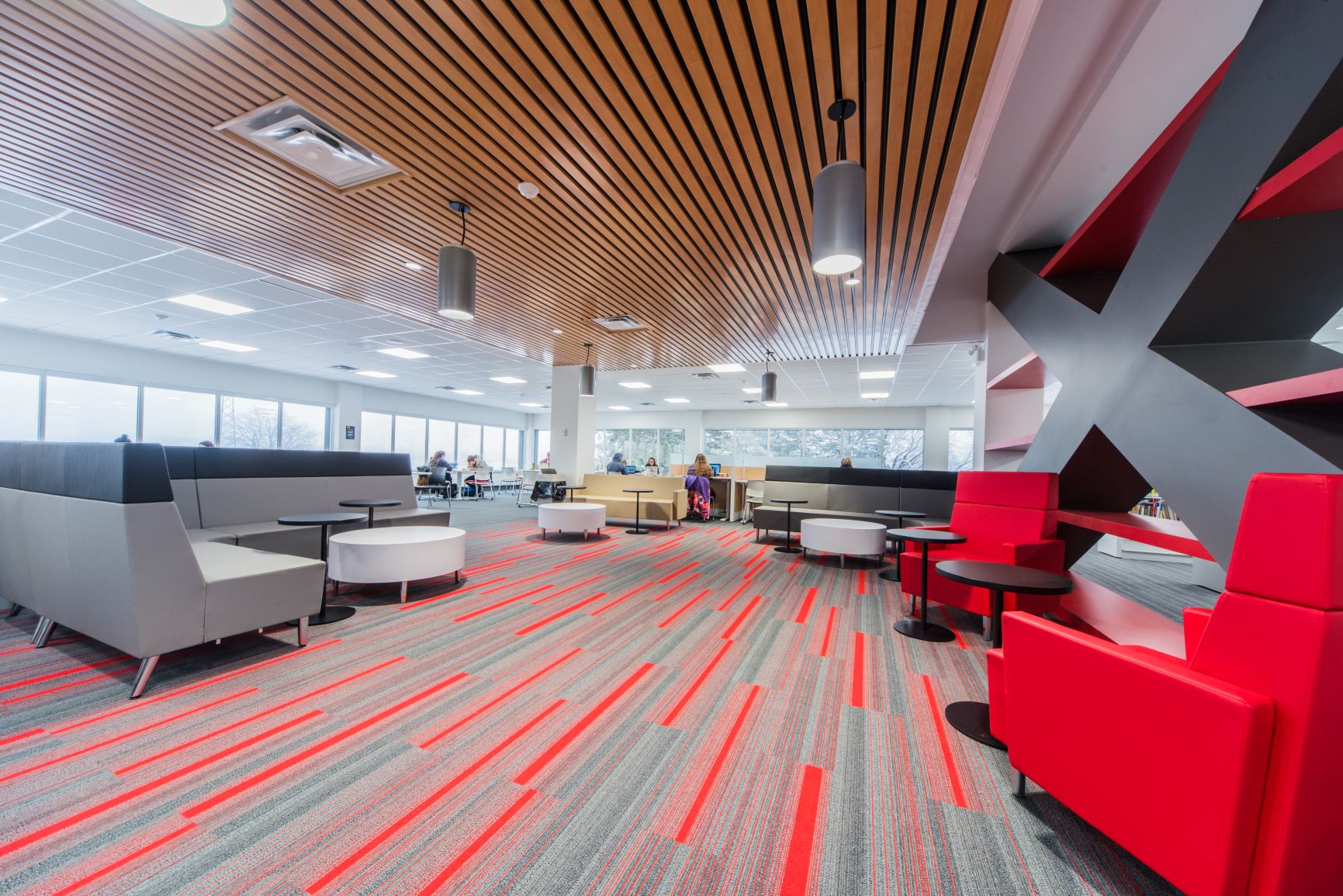
Enjoy waterfront views, modern health labs, a newly renovated library, and vibrant student spaces in our our Cornwall campus.
Career Opportunities
Graduates have the skills to work in the planning and development industry within Ontario and beyond in roles of assistant or junior planner positions in career areas such as:
- Municipal land use planning
- Urban planning
- Parks and recreation planning
- Transit planning
- Environmental planning
- Management consultancy
Other Information
The St. Lawrence College of Applied Arts and Technology (“St. Lawrence College”) is currently pursuing an amalgamation with The Sir Sandford Fleming College of Applied Arts and Technology (“Fleming College”), with a proposed effective date of April 1, 2027, subject to approval by the Ministry of Colleges, Universities, Research Excellence and Security. If the proposed amalgamation proceeds, students admitted to St. Lawrence College or Fleming College may ultimately study at, and receive their credential from, the amalgamated institution, which may have a different name than the institution to which they originally applied.
Program Contacts
For questions about this program, please email askus@flemingcollege.ca