 Indigenous
Overview
Note: This program is a Fleming College program that is being offered at St. Lawrence College. Students will apply and be accepted to Fleming College, and will study at the St. Lawrence Brockville campus.
The Developmental Services Worker program focuses on providing practical and meaningful services and support with individuals of all ages who have intellectual, physical and learning disabilities with a focus on human rights social justice, community inclusion and health.
Program Details
Program Highlights
Gradates of the Developmental Services Worker program have the specialized knowledge, skills, competencies and attitudes to support the rights and empowerment of people with disabilities and their family. They demonstrate leadership in promoting social inclusion and helping people live their best lives. Graduates provide support and services to children, youth, and adults with various intellectual disabilities, such as autism, neurocognitive disorders, down syndrome, fetal alcohol spectrum disorder, acquired brain injury, physical disabilities or learning disabilities.
These four semesters (two years) give students the knowledge and skills required for professionals who make a difference every day in the lives of children, youth and adults who have disabilities, and their support network, at home and in their communities. This includes specific skills to support people with disabilities in schools, recreation, mental health and addictions, the justice system, employment support and other places in our communities. Students also have the option to focus more on First nations, Inuit and Metis peoples through the Indigenous Perspectives Designation. Curriculum and field placements align with provincial and industry standards for the developmental services sector and is:
- Focused on person-centered, strength-based assessments and develop strategies for individuals, their families, and community inclusion.
- Grounded in professional competencies, ethics and values such as social justice, empowerment, dignity, self-worth, the importance of healthy human relationships, and integrity.
- Dynamic with hands-on and applied learning labs, simulation, and community-based projects.
- Connected to organizations that hire graduates with 685 hours in field placements beginning in semester 3
- Responsible through sustainability outcomes
Program Outline
2027-2028
Communications I for Community Development Professionals is an introductory course that provides a foundation in college-level communications. In this course, students learn to read critically, write appropriately for a variety of audiences, conduct research, cite references, revise for clarity and correctness, and present those results in various formats. In seminars, labs, and modules students will engage in both independent and collaborative activities, including the development and presentation of a research assignment to help them become more effective communicators in academic and professional contexts in Community Development.
This course provides students with an overview of introductory theories and skills used in the helping profession. As a foundation for the next two levels of counseling-specific courses students will be introduced to a range of collaborative practices and communication techniques with an emphasis on the person centered approach. Students will apply a strength based perspective that focuses on strengths, supports, resilience, capacity for personal responsibility, self-advocacy and positive change. Additionally, students will evaluate their own strengths and challenges that impact upon their roles in the helping profession through an exploration of self and an understanding of transference and countertransference. Students will be required to demonstrate practical applications of skills through experiential activities.
This course introduces students to the scope and practice of social service work, Developmental services work and the field of addiction and mental health. Students will examine models of understanding people's experiences using an anti-oppressive framework. Students will learn different models, theories and interventions and understand the relationship between autonomy, self-determination, resilience and recovery. Emphasis will be placed on the standards of practice and competencies required to work in the fields of social service work, developmental services (disability support) and mental health and addiction.
Person Centred Planning is an approach to organizing services and support in the community for people with developmental disabilities. This course presents the underlying philosophy and basic components of a planning process that will provide co-ordinated, comprehensive and effective support to people with developmental disabilities. This course will introduce students to a variety of person centered planning strategies. Using a holistic, person-centered approach, students will learn to promote and support self-advocacy and independence in the implementation of the personal directed plans. Students will understand the control dynamics associated with the individuals they support; apply assessment strategies that support personal empowerment using a strength-based approach; and apply positive instructional strategies that encourage skill mastery and personal choice. This course concludes with an examination of the tools used to promote choice, wish-fulfillment and self-determination.
Thriving at College is designed to help students become confident and effective in using various strategies to thrive academically. Using a growth mindset approach, this course will provide students with practical, hands on knowledge, skills, attitudes and behaviors to succeed in college and beyond. Topics include how we learn, emotional intelligence, goal setting, study strategies, group work, critical thinking, research skills, self-reflection, and self-management. Specific focus on college and community supports and services will also be included.
Human development across the lifespan will be studied by exploring the interrelationship between biological, psychological and sociocultural influences from conception to end of life. Upon completion of the course, learners will have an understanding of individual development, in addition to the impact of lifespan development on families and communities. Learners will have the opportunity to follow an individual's development throughout the lifespan, using a variety of biopsychosocial factors.
This course offers a systematic approach to exploring human behaviour. The concepts and empirical findings are examined using a variety of theoretical approaches. Major topics include perception, motivation, learning, memory, intelligence, and personality.
This course is an introduction to the study of Indigenous (First Nations, Metis, and Inuit) peoples in Canada. Students will explore the complex historical and contemporary relationships between Indigenous and non-Indigenous peoples. The course will also guide students to begin to understand the diversity and depth of Indigenous societies, worldviews, and knowledge through a multi-disciplinary lens.
This course introduces students to a wide variety of formal and informal community support services that work together to enhance the quality of life for people with developmental disabilities and their families. This course examines provincial standards of practice, the code of ethics, and professionalism in the field of developmental services. Career options and opportunities are presented, along with details regarding the expectations, evaluations, and elements of performance involved in two field placements. Students will research agencies in the community and future employment and/or placement opportunities. Students will prepare for their field placement experiences by gathering information about community supports and services. Assignments integrate theory with student anticipated practical experiences in residential/community field placement. This course is a prerequisite for all field placements.
This course provides students with the opportunity to develop skills and techniques to support teaching and learning activities for people with developmental disabilities in the educational, community and home based contexts. This course provides students with an introduction to concepts and principles of learning theory and applied behavioural analysis. Learning theories and the key elements of the ABC Model will be reviewed, in particular the use of reinforcement strategies to promote learning and how to define behaviour objectively. Emphasis will be placed upon respecting the value, dignity and rights of the individual when completing a behavioural assessment, planning behavioural intervention, and understanding and implementing individual educational plans and behavioural support plans. Personal growth will be highlighted throughout the course as students will be expected to change something about their own behaviours by applying learning theories. Students will investigate the ethical utilization of the behavioural intervention techniques studied.
This course provides students with an opportunity to identify the basic principles of providing personal care to people requiring extensive/pervasive supports. Experiential laboratory learning opportunities are used to develop skills in assessing vital signs, hygiene care, changing simple dressings, controlling infectious diseases, thermal applications, body mechanics, and lifting and transporting individuals. Students will incorporate motor learning and personal care into curriculum areas, and identify the relative difficulty of various motor skills. The problem solving process is applied to case profiles to develop creative problem solving, critical thinking and personal time management skills. This course concludes with an in-depth look at challenging behaviour.
This course examines the principles of community development and advocacy. Students will learn to develop, implement and evaluate effective strategies for inclusion of people with developmental disabilities and their families in the community. Students will be expected to develop a plan to strengthen the capacity of a community to welcome and include people with developmental disabilities. The course will combine theory with practical applications. Students will learn how to advocate for opportunities for full citizenship and full inclusion in community. This course focuses on ways of promoting growth and empowerment of people with developmental disabilities. Students will integrate models of community development with an understanding of the impact, collective experience and the process of being marginalized for people with developmental disabilities.
This course provides students with knowledge and skills, which will increase their effectiveness in supporting people with a dual diagnosis (a developmental disability and a mental health problem). Students are introduced to the history and theory of dual diagnosis and the provision of coordinated systems of support. The etiology, clinical characteristics and treatment of mental health disorders are studied in the context of dual diagnosis. Emphasis is placed on the role of the DSW in providing direct support to people who are dually diagnosed.
This course encompasses the historical aspects that have shaped developmental services in Ontario and how they compare to international standards. The functions of social service systems and how individuals navigate within the systems will be explored. Learners will discuss how their personal values and beliefs affect professional relationships. Topics will include political schools of thought, social welfare policies/programs, organizational theories and structure, agents of change, anti-oppressive practice and community resources as they relate to supporting individuals with intellectual disabilities throughout their lifespan as well as their families. Relevant social policies and legislation are also discussed. The role of Developmental Services Worker's role in advocating for supports, resources and full citizenship through social inclusion will be explored in depth.
This course introduces students to definitions, terminology, causes, prevalence, signs and symptoms and approaches for a variety of syndromes and associated disabilities. The student will gain an understanding of the history of services for persons with developmental disabilities and its impact on the current provision of services. The student will be introduced to a range of exceptionalities including intellectual, physical, behavioural, and communicational from a biopsychosocial perspective. The lifespan of persons with developmental disabilities is explored with a focus on preschool, school age, adults, and elderly persons with reference to the impact on the family and the requisite services. Terms and assumptions underlying models of care and supports and services for everyday life challenges for individuals with disabilities will be explored. This course concludes with an examination of the impact of social role valorization on the perception of persons with developmental disabilities.
This course will support students in recognizing, reporting, documenting and the prevention of abuse with people with developmental disabilities. The student will examine the developmental stages, various familial structures, and functioning of families through the lens of both ecological and family systems theories. Students will be exposed to basic assessment tools such as the ecomap and genogram which help to identify and organize the strength of relationships and patterns of behaviours/outcomes that can be cyclical in nature. Students will explore how family of origin/community can impact individual members through their life using both case scenarios and their own histories. This course will result in greater awareness of the vulnerability of people who have developmental disabilities and the latest approaches in detection, prevention and reporting of abuse. Current legislation, regulations and standards of practice will be examined.
This course introduces students to the basics of American Sign Language (ASL) and augmentative communication. Students will learn ASL skills appropriate in a variety of settings and with the different functioning levels of people with developmental disabilities and/or physical limitations. Students will be required to research augmentative communication options appropriate for people who have developmental disabilities and will learn how to develop, implement and evaluate visual tools used in the field.
This course provides students with an opportunity to build on the skills and techniques learned in Communications for the Helping Professional and to develop communication skills necessary to function appropriately and professionally in the field of developmental services. Students will learn the difference between objective and subjective recounting of events, both verbally and written, as well as the potential purposes of each type. Various techniques to measure behaviours will be covered. The student will be required to conduct a comprehensive assessment plan including recommended strategies for interventions. The importance of clear, concise, and comprehensive documentation will be highlighted throughout the course. This course provides the communication skills necessary to function appropriately and professionally in the field as records keepers and as advocates. Students learn to use the required forms and levels of language, write standard memos, letters and reports and give oral presentations.
The DSW program has been designed to include two field placement opportunities; one within a residential setting and one within a community setting. Students selecting a residential setting for Field Placement I will be required to select a community setting for Field Placement II or vice versa. Supervised field placements provide student with an opportunity to safely, responsibly, and progressively practice the skills and abilities required for the field. The combination of academic and experiential learning is effective in developing and enhancing skills and promoting employability in the field. This field placement is two days a week for thirteen weeks.
This course is a continuation of Health & Wellbeing I and II, with a focus on health promotion and illness prevention. This course introduces students to specific body systems with special emphasis on disorders associated with each. In this course, students learn about specific human body systems and explore the relationship between human physiology, disease and disabilities. With human physiology in mind, students learn and create strategies to promote and optimize the health of persons with disabilities. Students review the anatomy and physiology of human reproduction. Strategies and methods to promote healthy sexuality for persons with disabilities are addressed. Students will integrate a holistic approach of the people they support in general health promotion and illness prevention.
This introductory course provides an overview of drug therapy and the role of the developmental services worker in the administration of medications. Students will learn important principles of pharmacology that are essential for ensuring safe administration of medication. In-class theory, as well as practical learning activities and assignments help students develop an understanding of drug legislation in Canada, safe medication administration practices and the actions of major drug groups. Students will have a foundation of knowledge about medications that can be supplemented throughout their field placements and professional lives.
Students will explore family structure and function in the context of a loved one with a disability. The focus of this course will be on how professionals can understand and support families from systems and strength based approaches. Students will also explore the various roles related to facilitating community volunteer and employment opportunities that are meaningful to the person being hired as well as the organization. Job development, coaching skills and effective networking are essential skills that will be highlighted and taught in this course.
This course builds upon the general principles of behaviour management techniques that were introduced in Teaching and Intervention Strategies. The emphasis will be upon the utilization of positive behavioural approaches, specifically with people who have developmental disabilities. There will be a focus on conducting functional assessments and developing programs, which will enhance the quality of life of these individuals. Students learn the theory of safe practice in order to provide comprehensive interventions that contribute to the quality of life of persons requiring extensive or more complex levels of support. This course will provide students with a hands-on approach to the development of skills and competencies that expand the scope of practice of developmental services workers.
The DSW program has been designed to include two field placement opportunities; one within a residential setting and one within a community setting. Students selecting a residential setting for Field Placement I will be required to select a community setting for Field Placement II or vice versa. Supervised field placements provide student with an opportunity to safely, responsibly, and progressively practice the skills and abilities required for the field. The combination of academic and experiential learning is effective in developing and enhancing skills and promoting employability in the field. This field placement is five days a week for fifteen weeks. Students are required to complete all level one, two and three courses and have permission from the Coordinator to participate in field placement.
In this Developmental Services Worker Program third placement course, students will find a placement along with guidance from faculty that they believe will benefit them in their learning goals and their career path. In order to be eligible for the Person Directed Planning Facilitation Certificate students will need to work with a specific individual they will be supporting and will facilitate a Person Centred Review process with them under the supervision of the Faculty. Supervised field placements provide student with an opportunity to be assessed on safely, responsibly, and progressively practicing the skills, abilities and competencies taught in previous semesters that are required for this career path. The combination of academic and experiential learning is effective in developing and enhancing skills and promoting employability in the field. This field placement is five days a week for seven weeks. Students are required to complete all level one, two and three courses as well as FLPL 243-DSW Field Placement II, and have permission from the Coordinator to participate in this field placement. Students must also meet the Non Academic Requirements by the deadline prior to this placement.
Students will have the opportunity to explore how to start a business for themselves as an independent facilitator working for children youth and adults who receive individualized funding or their families. Essentials of a business plan as well as insurance and contracts etc. will be discussed in this course.
Requirements
Admission Requirements
Ontario Secondary School Diploma (OSSD) with the majority of Grade 11 and 12 courses at the C, U or M level including the following prerequisites:
- Grade 12 English at the C level.
Health Requirements
-
Measles, Mumps, Rubella (MMR) - proof of vaccination or immunity.
-
Varicella (Chickenpox) - proof of vaccination or immunity.
-
Tetanus, Diphtheria, Pertussis (Tdap/Td) - current immunization status.
-
Polio - documentation of childhood or adult series.
-
Hepatitis B - vaccination series, sometimes with bloodwork confirming immunity.
-
COVID-19 - requirements vary by placement agency
-
Tuberculosis (TB) screening (two-step or one-step testing depending on previous history).
Other Requirements
- Vulnerable Sector Police Check (VSC)
- Standard First Aid
-
CPR-C
Fees
2027-2028
Fees are estimates only. Tuition is based on two semesters. Final fees for the 2027-2028 academic year will be posted in Spring 2027.
Fees are estimates only. Tuition is based on two semesters. Final fees for the 2027-2028 academic year will be posted in Spring 2027.
Brockville
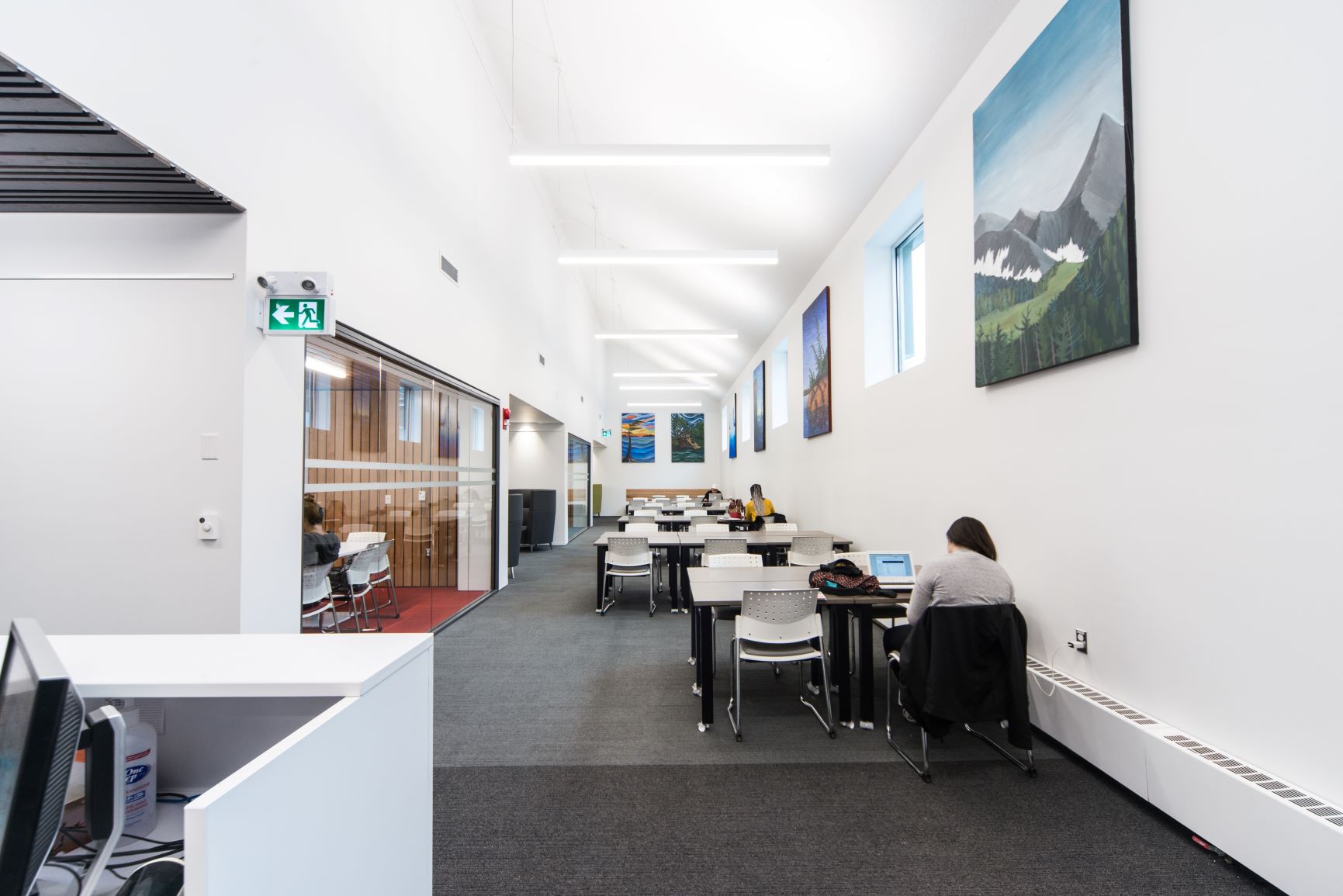
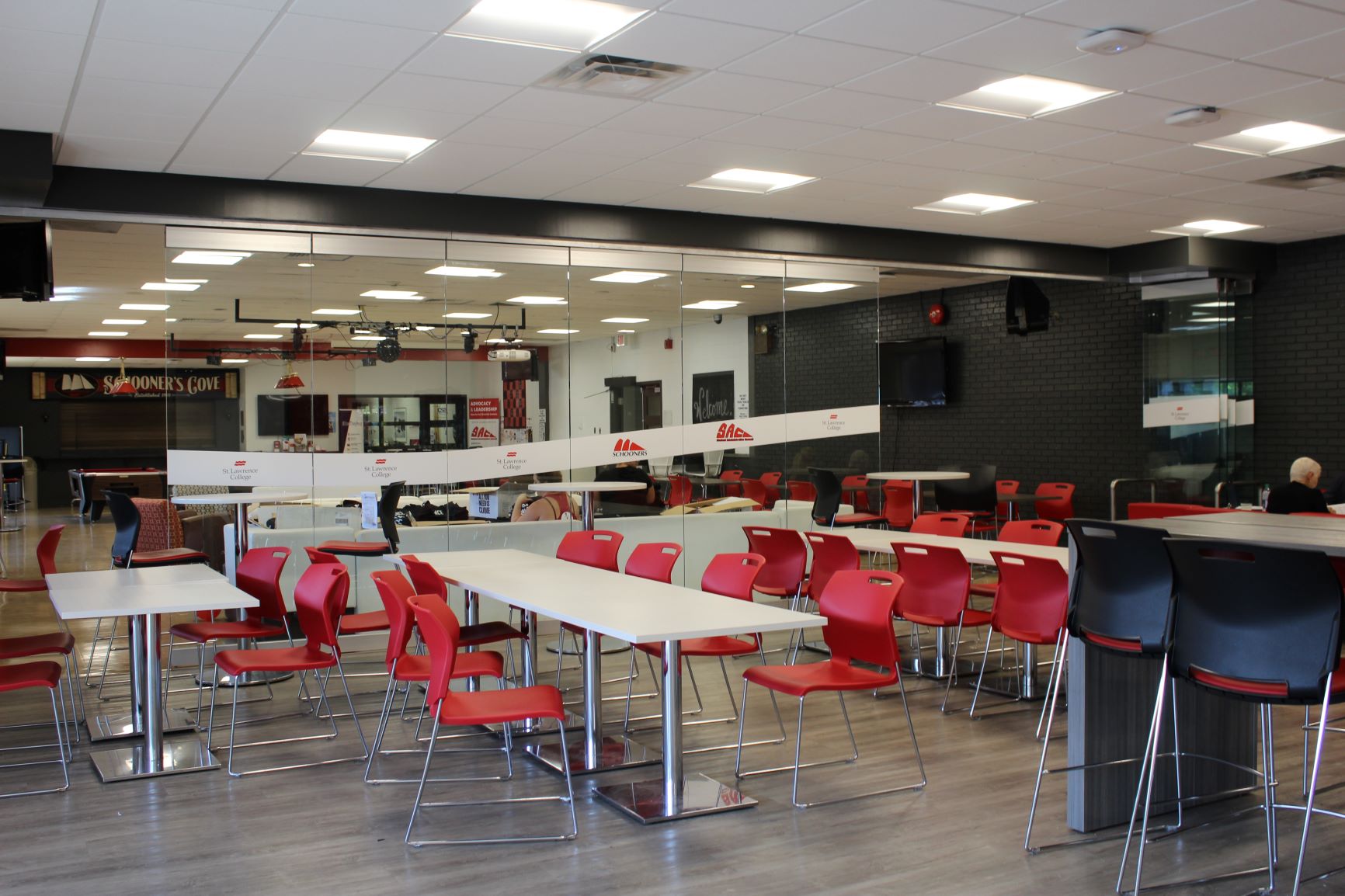
Our Brockville campus has a modernized library, complete with individual and group study space, a newly renovated cafeteria, student common lounges, and more.
Career Opportunities
Career Opportunities providing supports and services to those with intellectual or physical disabilities is highly rewarding work. There is a shortage of skilled and qualified workers to meet the demand in the developmental services and disability sectors, as well as related employment.
For greater employability options, a Class G Drivers license prior to graduation is highly recommended. Graduates will have the required expertise to work with people of all ages in a variety of diverse settings in Ontario, across Canada or abroad, including:
- Mental health/Dual Diagnosis
- Self-employment through individualized funding
- Facilitating Person-Directed Planning
- Educational Support in primary, secondary and post-secondary schools
- Employment supports
- Community inclusion initiatives and teaching life skills
- Home based supports.
- Behavioural supports
- Various camps
Other Information
The St. Lawrence College of Applied Arts and Technology (“St. Lawrence College”) is currently pursuing an amalgamation with The Sir Sandford Fleming College of Applied Arts and Technology (“Fleming College”), with a proposed effective date of April 1, 2027, subject to approval by the Ministry of Colleges, Universities, Research Excellence and Security. If the proposed amalgamation proceeds, students admitted to St. Lawrence College or Fleming College may ultimately study at, and receive their credential from, the amalgamated institution, which may have a different name than the institution to which they originally applied.
Program Contacts
For questions about this program, please email askus@flemingcollege.ca