 Indigenous
 Overview
Note: This program is a Fleming College program that is being offered at St. Lawrence College. Students will apply to and be accepted to Fleming College, and will study at the St. Lawrence Brockville campus.
Our two-year Educational Support diploma program prepares you to work in a school setting as part of the educational team supporting children with special needs. You will help children with learning disabilities, intellectual disabilities, sensory or physical disabilities and behavioural challenges.
Technology plays a key role in today’s modern classroom or institutional setting, and this program will enhance your knowledge of digital literacy and the assistive technologies you will use in your future career. You’ll graduate fully prepared to help students using iPads and current apps, including SMART Boards and other assistive technologies, such as voice-to-text software.
Program Details
Program Highlights
You will benefit from our faculty members’ recent and extensive experience in the field. In the second and third semesters, the roles of teacher and educational assistant will be explored and more clearly defined. You'll learn how to:
- manage behaviour
- modify educational programming
- support childen with learning disabilities
- assist with curriculum planning
Much of this training is experiential, taking place in various educational settings in the community.
During third semester, you will spend three days a week in class at the College and two days a week in a classroom in an area school. The final part of the program is an intensive, semester-long, practical learning experience in an educational setting or agency. During this placement experience, you'll work with students with a range of exceptionalities including autism, physical disabilities, cognitive disabilities, visual impairments, and learning disabilities. You can complete your placement in the location of your choice, whether that’s in your home town, or another city in Ontario.
Program Outline
2027-2028
Human development across the lifespan will be studied by exploring the interrelationship between biological, psychological and sociocultural influences from conception to end of life. Upon completion of the course, learners will have an understanding of individual development, in addition to the impact of lifespan development on families and communities. Learners will have the opportunity to follow an individual's development throughout the lifespan, using a variety of biopsychosocial factors.
This course offers a systematic approach to exploring human behaviour. The concepts and empirical findings are examined using a variety of theoretical approaches. Major topics include perception, motivation, learning, memory, intelligence, and personality.
Communications I for Community Development Professionals is an introductory course that provides a foundation in college-level communications. In this course, students learn to read critically, write appropriately for a variety of audiences, conduct research, cite references, revise for clarity and correctness, and present those results in various formats. In seminars, labs, and modules students will engage in both independent and collaborative activities, including the development and presentation of a research assignment to help them become more effective communicators in academic and professional contexts in Community Development.
This course is an introduction to the study of Indigenous (First Nations, Metis, and Inuit) peoples in Canada. Students will explore the complex historical and contemporary relationships between Indigenous and non-Indigenous peoples. The course will also guide students to begin to understand the diversity and depth of Indigenous societies, worldviews, and knowledge through a multi-disciplinary lens.
In this course, students will learn the roles and responsibilities of an Educational Support Worker as a part of the multi-disciplinary team. Topics discussed will include professionalism, confidentiality and communication as well as an overview of legislation, regulations, school board procedures and policies. In addition, students will gain an understanding of current trends and issues within the field of education.
This course prepares students to use technology efficiently and effectively in college and workplace environments. Topics include Windows 10, Microsoft Office 365 (Word, PowerPoint, Excel, and Outlook), myCampus Portal, D2L, Internet, file management, collaboration tools, LinkedIn, and various social media platforms as they relate to professionalism in the field of Human Services. Course content is delivered through in-class labs using lecture, guided instruction, discussions, and hands-on activities, and through online self-directed learning (SDL) tutorials, articles and activities. Students will improve their technology skills and build a professional online image.
Examine Literacy, Numeracy, and other subject areas of the Ontario Curriculum, including Special Education policy and the Individual Education Plan. Investigate strategies and skills Educational Support staff use to assist students' achievement of curriculum expectations and learning goals of the IEP. Demonstrate the use of concrete materials and technology that support universal design, equity, and student success.
This course will explore various assistive technologies and devices used within the school setting. Assistive technology (AT) refers to equipment that improves the functional capabilities of individuals with exceptionalities. Students will discuss the roles of AT and its ability to promote independent participation of learners in the learning process. Students will have the opportunity to become familiar with a variety of assistive technologies, both hardware and software, and how they can be implemented in a classroom.
This course will introduce students to the major areas of exceptionality as they are found in children. Knowledge and skills related to individual program planning will also be included.
The two main goals of this course are to provide the students with an initial exposure to the field in their program speciality area and to prepare them to plan and negotiate future field practice experiences with a school or agency related to their field.
This course will provide the opportunity for students to develop the knowledge, skills and attitudes required to effectively support individuals with Neurodevelopmental Disabilities in a school setting. Neurodevelopmental Disabilities are exceptionalities that are associated primarily with the functioning of the neurological system and brain, and can produce challenges in personal, social, academic, or occupational functioning.
This course studies the educational implications that may accompany physical disabilities resulting from a variety of disorders such as neurological defects, orthopaedic conditions, birth defects, infection or disease. The student will acquire knowledge of methods, materials and equipment that will assist in meeting the pupils' special needs at school.
This course is the in-class portion of the student's first field placement.
This course builds on a foundation of behavioural theory, paradigms, and perspectives and investigates a wide variety of approaches in managing, modelling, encouraging and supporting positive student behaviour in schools. Pro-active and re-active strategies, culturally-sensitive approaches, connections to safe and healthy school policies and procedures, and current issues in behaviour management will be addressed.
Normally, students will have completed all other courses in this program before beginning this course. They must have the written permission of the program co-ordinator to enroll in this course if they have not completed all other courses.
Requirements
Admission Requirements
Ontario Secondary School Diploma (OSSD) with the majority of Grade 11 and 12 courses at the C, U or M level including the following prerequisites:
- Grade 12 English at the C level
Health Requirements
Please connect with askus@flemingcollege.ca for immunization and other health requirements.
Other Requirements
Criminal Background Check:
Applicants are advised that Criminal Background Checks (CBC) conducted by the Canadian Police Information Centre (CPIC) are required for programs with field or clinical placements. Certain criminal convictions may prevent participation in placements and program completion may not be possible. Attaining and paying for a CBC and Vulnerable Sector Screening (OPP) is the responsibility of the student, and these may have to be renewed every three to six months. Applicants with criminal records are advised to contact the Associate Dean/Campus Dean of the respective school prior to applying.
- Vulnerable Sector Check
- Standard First Aid and CPR-C
- PC / Windows
-
Operating System:Windows 10
-
Processor:Core i5 - 1.6Ghz minimum
-
Memory:8GB minimum
-
Hard Disk:160GB minimum
Apple / MacOS
-
Operating System:MacOS 10.12 or newer
-
Processor:Core i5 6th Gen or better
-
Memory:8GB minimum
-
Hard Disk:160GB minimum
Internet Connection: 2.5 Mbps Download and 3.0 Mbps Upload (minimum)
Students are required to have their own laptop, internet access, webcam and microphone.
Placement
SPF/Faculty arrange placements.
Student Placement Facilitator (SPF) Support
- 6 Training Modules
- Student Declaration/Oath of Confidentiality
- Student Covid 19 Waiver
- Immunization (see above under "Health Requirements")
- CPIC – VULNERABLE SECTOR
- First Aid & CPR
Fees
2027-2028
Fees are estimates only. Tuition is based on two semesters. Final fees will be posted in Spring 2027 for the 2027-2028 academic year.
Fees are estimates only. Tuition is based on two semesters. Final fees will be posted in Spring 2027 for the 2027-2028 academic year.
Brockville
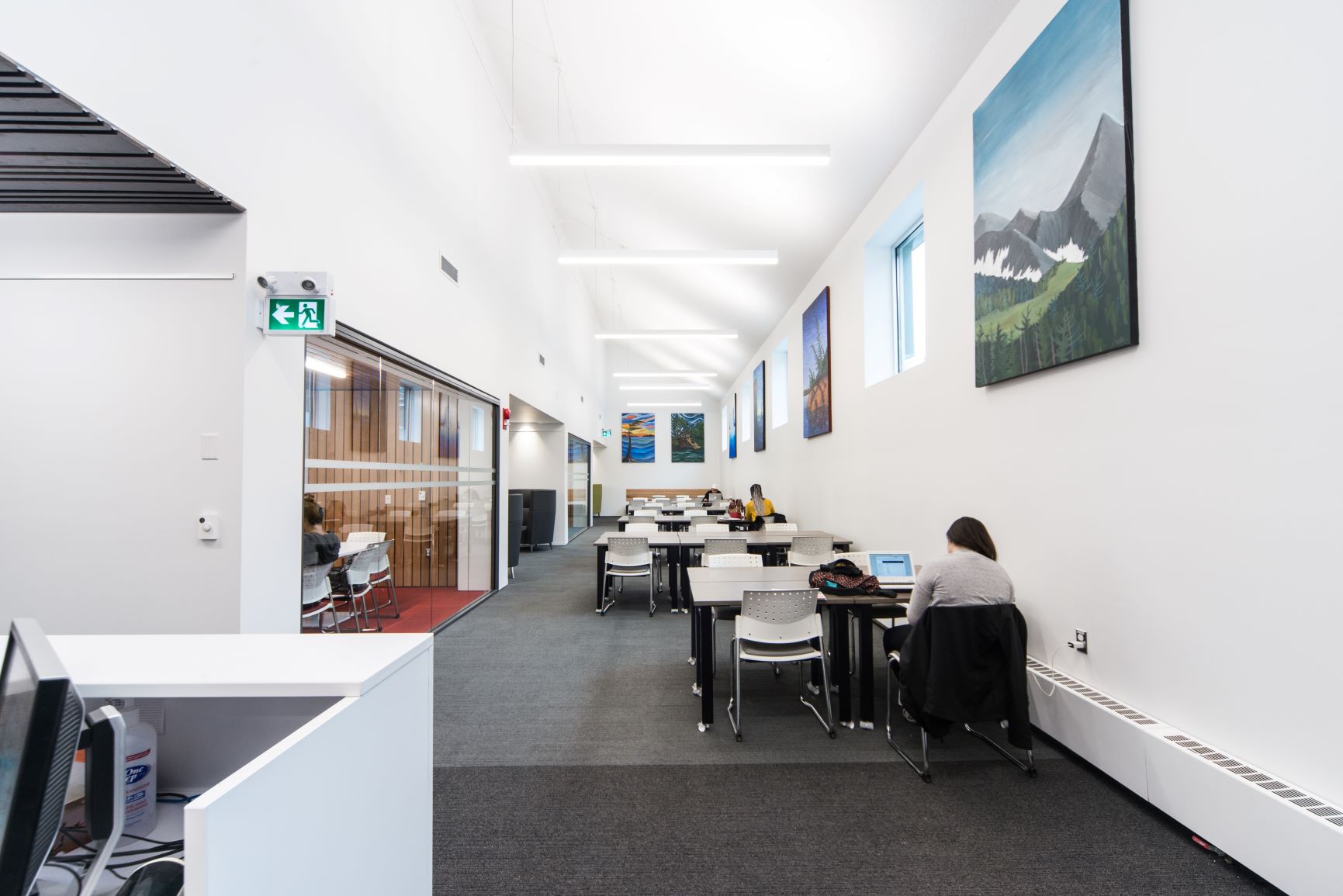
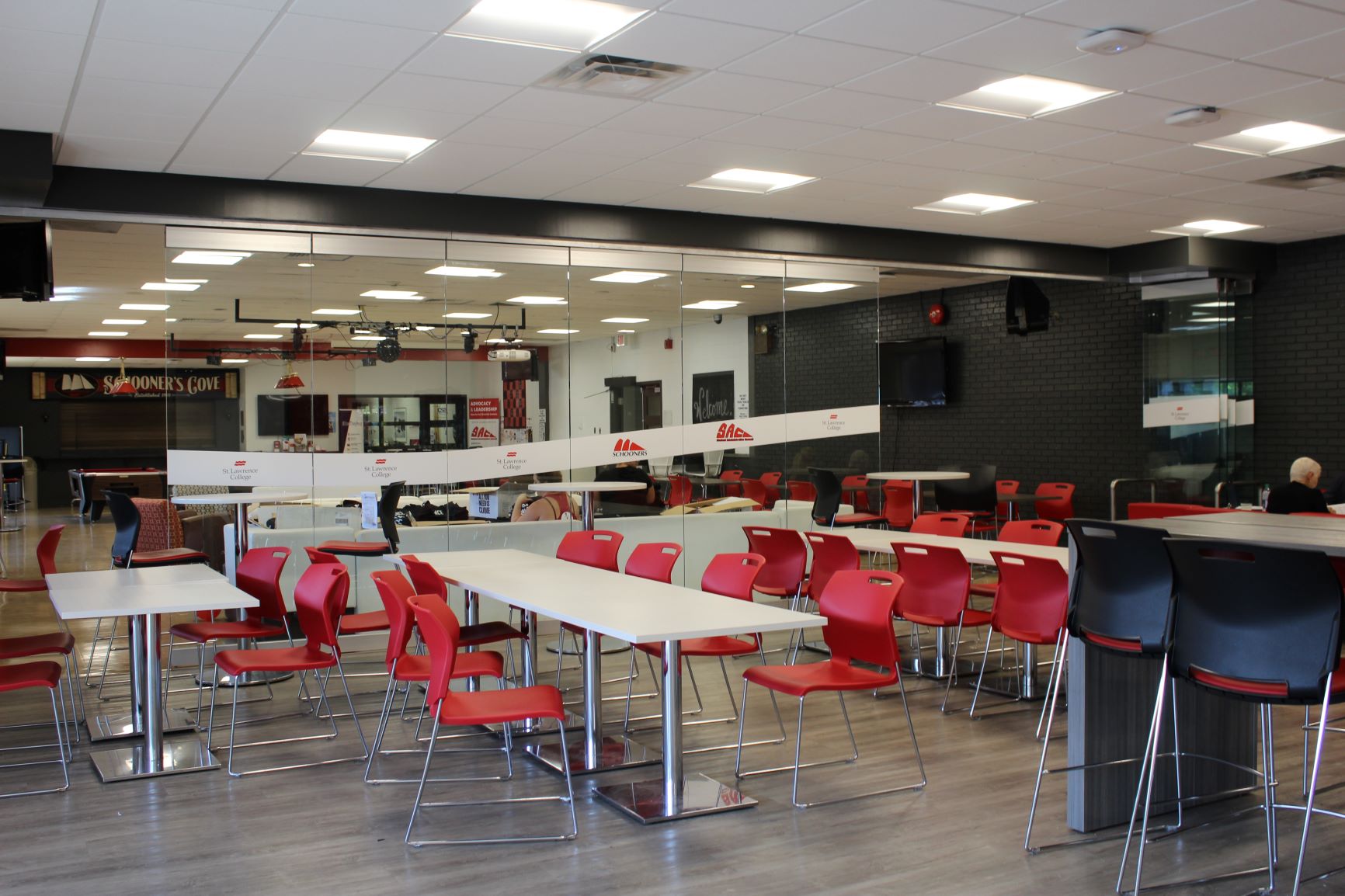
Our Brockville campus has a modernized library, complete with individual and group study space, a newly renovated cafeteria, student common lounges, and more.
Career Opportunities
The main employer of educational support professionals is the school system, but there are also opportunities in other institutional settings offering education as part of the programming. Some of our graduates find employment as a result of their semester-four placement and may even be offered a job prior to graduation.
Other Information
The St. Lawrence College of Applied Arts and Technology (“St. Lawrence College”) is currently pursuing an amalgamation with The Sir Sandford Fleming College of Applied Arts and Technology (“Fleming College”), with a proposed effective date of April 1, 2027, subject to approval by the Ministry of Colleges, Universities, Research Excellence and Security. If the proposed amalgamation proceeds, students admitted to St. Lawrence College or Fleming College may ultimately study at, and receive their credential from, the amalgamated institution, which may have a different name than the institution to which they originally applied.
Program Contacts
For questions about this program, please email askus@flemingcollege.ca