 Indigenous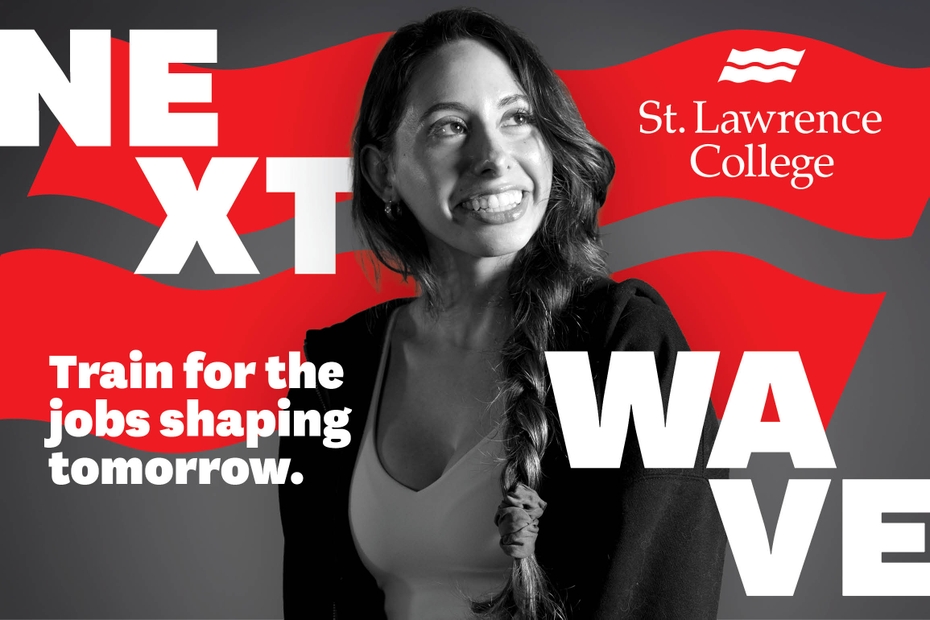
A Q&A with Heidi Wallace Patenaude and Vince Perez, Graphic Designers, SLC’s Marketing Team
St. Lawrence College is set to unveil The Next Wave, a new marketing and recruiting campaign that reimagines how the college tells its story to prospective students, current students, employees, alumni, and the wider community. With the oversight of Sean McDade, SLC’s Director of Recruitment and Marketing, and Debbie Rogers, SLC's Associate Director of Global Marketing, the new campaign was created entirely in-house by Graphic Designers Heidi Wallace Patenaude and Vince Perez, with photography by SLC's Content Strategist & Designer Adam Smith. We spoke to Heidi and Vince about the concept, the visual choices behind it, and what they hope it will mean for everyone who encounters it.
Q: What inspired The Next Wave campaign concept?
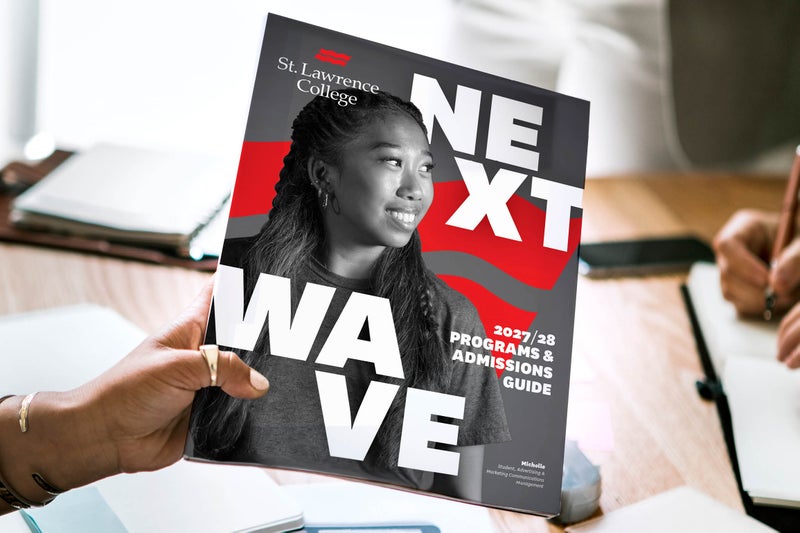
The concept grew out of a search for something that felt unmistakably SLC, an idea that could speak to the unique challenges and opportunities of this moment, both locally and globally. We found a starting point close to home: the college's distinct logo mark and its "waves." Drawing an aspirational slogan based on SLC’s visual history was something the college hadn't done before in a marketing campaign.
Q: Why was the wave chosen as the central visual element?
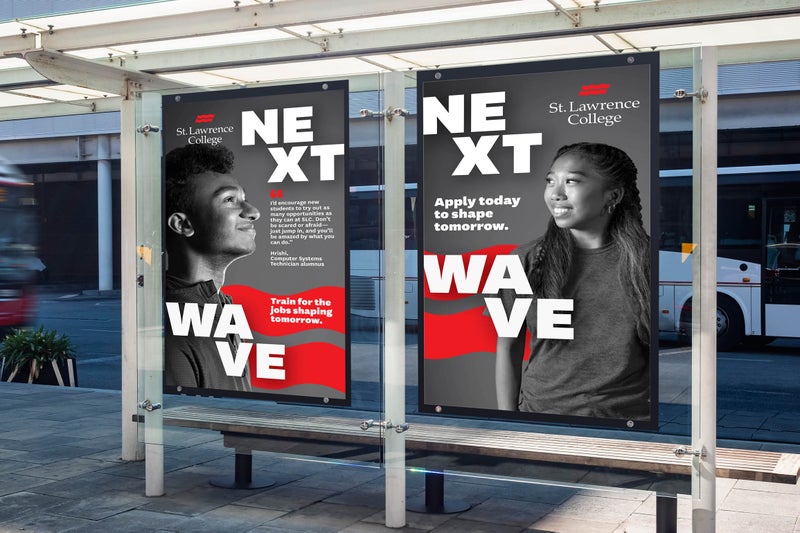
The wave carries meaning well beyond its literal nod to the St. Lawrence River. It has become a symbol of momentum, progress, leadership, and collective impact. The ripple effect one person's growth can have on their career, their industry, and their community is symbolic of the college's strategic directions: Our People, Our Programs, Our Students, and Our Communities. It's part of why The Next Wave was built to be more than a recruitment tool. It's a platform that students, employees, alumni, and community partners can all see themselves in.
Q: How does The Next Wave differ from previous recruitment campaigns?
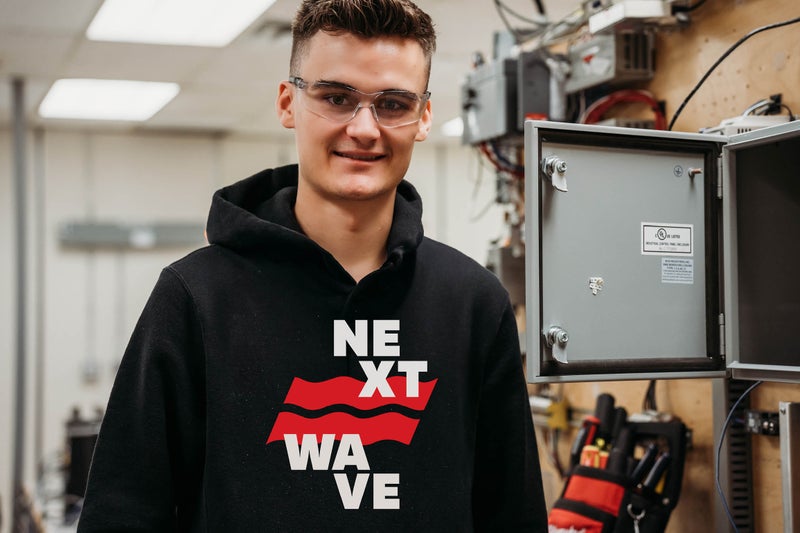
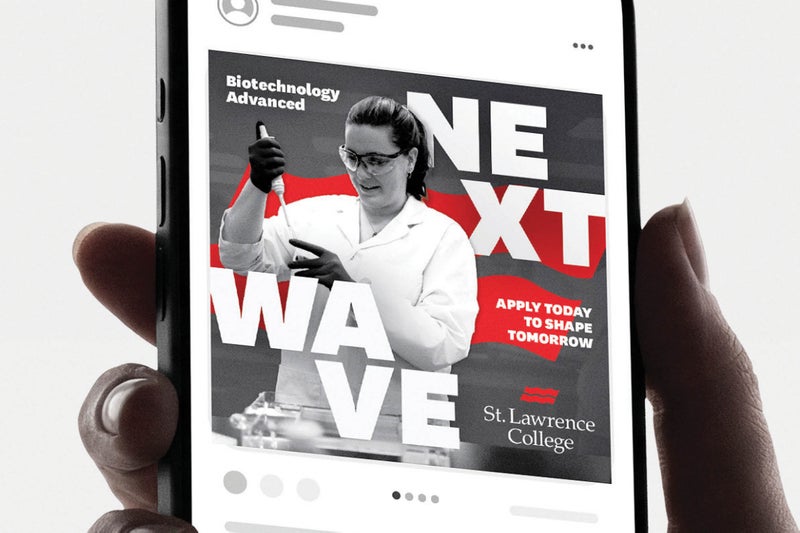
Rather than a break from the past, we see it as a natural evolution. Find Your Door, the college's previous campaign, helped prospective students imagine where their journey could begin, whereas The Next Wave builds on that foundation by focusing on what comes next. It centres photography of bold, future-focused students who look as though they've already stepped through that door and are moving forward with purpose. The shift reflects a simple insight: people want to see people, especially people who represent the future they want for themselves.
Q: What roles do the student portraits and other photography play in telling the story?
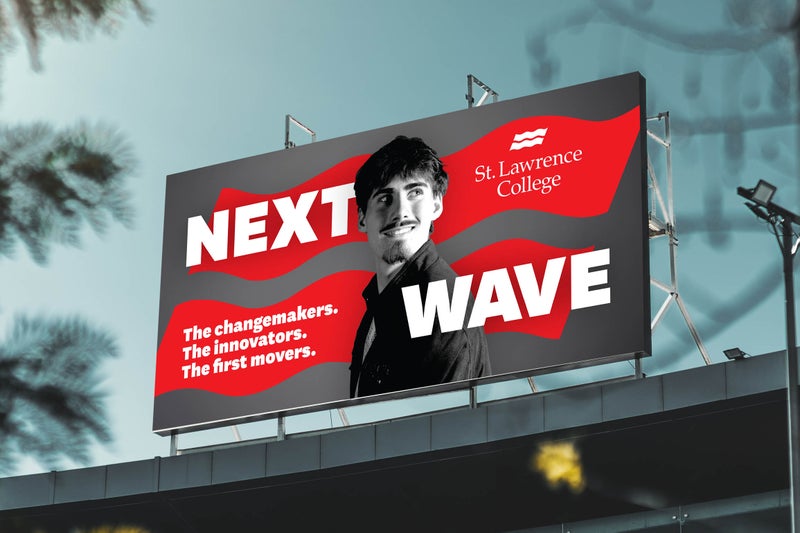
The campaign photography, brilliantly executed by Adam Smith, is grounded in the authentic experiences of SLC students, and portrays them as confident, visionary, and already in motion, using high-contrast, black-and-white photography. That stylistic choice was deliberate: a clear focal point that stands for clarity of purpose and individual determination.
Capturing something as layered as the academic experience in a single portrait isn't easy. We leaned on thoughtful stylization and a sensitive photographic approach to find a visual shorthand for student achievement, something aspirational rather than purely illustrative, more about the confidence of discovering your potential than about depicting a specific program.
Q: What do you hope prospective students feel when they see The Next Wave?
The hope is that prospective students see themselves reflected as future leaders and agents of change, not just as people preparing for a job, but as people who will shape the terms of their own future. The campaign invites them to imagine themselves leading change, influencing their industries, and contributing to stronger communities.
Q: Anything else you'd like to say about the campaign?
The Next Wave isn't just a creative refresh; it's a strategic repositioning. The photography and visual identity are distinctive, but the bigger idea behind The Next Wave is that it gives SLC a clear, ownable platform capable of unifying recruitment, institutional branding, employee pride, alumni engagement, and community perception under one idea. It's designed to attract the next generation of students while also reflecting the collective momentum of the college and everyone's role in shaping what's next.
Related: