 Indigenous
Overview
This is a one-year hands-on program focusing on the skills required to work in careers involving animal care. Students spend a large portion of their time working with animals. Students develop safe handling skills and learn how to perform physical examinations and treatments. The students operate the SLC "Scruffy Dog Salon” where they groom dogs under the supervision of experienced groomers. Lab time is also spent learning surgical support techniques and basic clinical laboratory procedures which aid in the diagnosis and treatment of disease in domestic animals.
The program is structured around four areas:
- Animal Diseases, Care and Restraint, and Grooming
- Laboratory and Surgical Support Preparation and Maintenance
- Front Office Management and Marketing
- Support Studies
Students learn about animal health and disease, behaviour, handling and general care (involving cats, dogs, exotic pets, wildlife and livestock), dog grooming, and basic laboratory procedures. Students also study computer operations and office procedures, and they practice communication and marketing techniques.
The skills graduates bring to their place of employment will help to increase both the quality and scope of the services provided to animals and their owners.
Program Details
Program Outline
2026-2027
In this course, students learn foundational health, housing, and maintenance requirements in the care and management of large animals (important aspects of a large animal veterinary practice). Learners explore basic husbandry, breed identification, terminology, physical examinations, vaccinations, parasite control, reproduction, and disease control.
In this course, students learn the basic care and husbandry of a variety of exotic animals sold as pets in Ontario and the basic skills of wildlife rehabilitation. Learners experience wildlife specimens through the lab portion of this course. Students explore Ministry of Natural Resources rules and regulations; International Wildlife Rehabilitation Council standards of care and basic skills; Rabies Vector Species (RVS) such as raccoons, foxes, bats, skunks, coyotes; and specific requirements for native Ontario wildlife species that are commonly presented to a wildlife rehabilitation center, shelters, or veterinary clinics.
In this course, students learn fundamental computer applications relevant to the veterinary environment. The use of medical data management software is an essential skill for veterinary professionals, and students explore current veterinary-specific software. Learners develop skills including scheduling and booking appointments, client file setup, updating medical records, estimate and invoice generation, and completion of transactions.
In this course, students learn the medical terminology used in the veterinary setting. Learners explore understanding the meaning of common suffixes and prefixes, and correct usage of common medical abbreviations and symbols. Students learn how to translate veterinary medical language to use in a client-centered way and vice versa.
In this course, students learn safe handling practices and fundamental grooming theory and techniques, including pre-work, bathing, drying, and clipping. Learners explore how to select appropriate tools, equipment, techniques, and products. Students identify the features of the canine and feline breeds and participate in demonstrations of handling and grooming techniques on owned pet dogs.
In this course, students learn about animal wellness concepts through various perspectives and the nature of the work done in a small animal veterinary clinic. Learners explore behaviour and safe and low-stress handling techniques, physical examination techniques, preventative health care including vaccination protocols and parasite control, commonly encountered pet diseases including zoonoses, emergency and nursing care, and regulations governing veterinary practice.
In this lab course, students practice humane/safe handling and restraint techniques, using a variety of tools. Learners explore the treatment of dogs and cats and practice calculations and measuring of drug dosages and recording of clinical findings. Students practice the rules of sanitation and safety necessary in the veterinary environment.
In this course, students learn the fundamentals of the veterinary surgical suite environment and the principles of sanitation and disinfection. Learners recognize and prepare common surgical instruments, surgical packs, and suture materials. Students learn patient care and recovery, first aid, record-keeping, and care and maintenance of the microscope. Learners provide general husbandry to the cats and dogs being boarded at the St. Lawrence College clinic.
In this course, students learn about the ethical considerations involved in working with animals in various settings. Learners explore how professional and veterinary ethics have evolved, and how the workplace has adapted to these changes as well as the intersections of ethics, compassion, and personal wellness.
In this course, students learn fundamental mathematical skills that apply to problem solving in the Veterinary Assistant field. Learners explore drug dosages, dilutions, nutrition calculations (daily and maintenance energy requirements), percent applications, and introductory statistics.
In this course, students develop the skills needed to provide office support in a veterinary clinic environment. Students learn the fundamentals of customer service, reception, appointment scheduling, billing procedures, inventory control, record management, and marketing. Veterinary computer software will be used for office procedures and medical record-keeping. Learners explore writing and verbal communication skills required in the office environment.
Prerequisite(s): ANIM 43
In this course, students learn the fundamentals of behavioural modification for canine companion animals. Students explore the calls and signals used when training dogs. Students learn how breed type and environmental stressors affect behavioural modification and how body language is a key indicator to a canine’s training state and training preparedness and training results.
In this course, students learn the fundamentals of various aspects of the Ontario Society for the Prevention of Cruelty to Animals Act and the Criminal Code of Canada. Learners explore the history of the OSPCA, activism vs. welfare, codes of practice, recognition of distress in animals, hoarding, and the correlation between animal abuse and violence to people. Students learn some foundations of animal shelter practice management.
In this course, students learn the fundamental rules and regulations involved in the care of experimental animals. Learners explore animal housing and husbandry practices such as general handling techniques required to restrain laboratory rats, mice, and rabbits safely and humanely. Students complete colony duty and perform husbandry tasks with the in-house lab animals.
In this course, students run specialized tests on common laboratory specimens and practice safe handling and disposal techniques. Learners explore physical and chemical control, cleaning, disinfection, antisepsis and sterilization techniques, and biohazard management in animal facilities. Students also learn how to manage and maintain IV fluid pumps using the concepts of fluid therapy.
In this course, students participate as a team member of the Scruffy Dog Salon, a working lab that services privately owned companion animals. Students learn the proper techniques used for bathing, brushing, and combing out dogs. Learners explore the scissoring techniques used on the various breeds of dogs.
Prerequisite(s): ANIM 119 + ANIM 24
In this course, students develop their restraint techniques and perform health check-ups and treatments during the labs at the Kingston Humane Society. Learners explore cleaning and treatments of the eye and ear, radiographic identification and processing, and familiarization with commonly used veterinary drugs.
Prerequisite(s): ANIM 41 + ANIM 119
In this course, students learn the fundamental concepts of nutrition required to advise clients on the nutritional needs of animals at various life stages. Learners explore how diets and medical conditions intersect. Students learn how to assess the quality of a diet.
In this course, students learn foundational aspects of canine and feline medicine. Learners explore anatomy and diseases of the eye and the ear, dental care, shelter care, pharmacology, parasitology, and emergency cases.
Prerequisite(s): ANIM 119
In this course, students prepare for work placement. Learners explore placement options and opportunities, the components of a good resume and cover letter, interviewing skills, and professional deportment. Students are guided through the process of preparing the documentation necessary for work placement.
Prerequisite(s): Successful completion of all prior courses and labs.
In this field placement, students observe and participate in an animal care environment. Learners apply their knowledge and skills learned to the real-world environment. Placement can be secured at regionally, nationally, or internationally approved sites.
Requirements
Admission Requirements
Ontario Secondary School Diploma (OSSD) with the majority of Grade 11 and 12 courses at the C, U or M level including the following prerequisites:
- Grade 12 English at the C or M level
- Grade 11 Math at the C, U or M level
For OSSD equivalency options, see Admission Requirements.
If you are missing prerequisite courses, enroll in the Career/College Prep program - free for Ontario residents who are 19 years or older.
- Are your transcripts from outside of Canada? Please visit Applying to SLC - With Your Transcripts for more information.
Health Requirements
Immunization - Communicable Disease Requirements
You must complete the Pre-Placement Health Form as a condition of your placement. THIS FORM IS YOUR RESPONSIBILITY
Completed forms are to be uploaded via Placement Pass by ParaMed. To learn more, please visit our ParaMed information page.
Questions can be directed to placements@sl.on.ca.
Important:
The SLC Campus Health Centre is available to administer the rabies vaccine for all students in SLC Veterinary programs. Please contact the Kingston Campus Health Centre to book your appointments, or for more information on scheduled rabies vaccine clinics for your program.
Kingston Campus Health Centre
Phone: 613-544-5400 ext. 5521
Email: HealthCentreK@sl.on.ca
Room 01220
As a Full-time SLC student, you are automatically enrolled in a student insurance plan. To learn more about how this applies to your immunization requirements please visit www.wespeakstudent.com (domestic) or www.guard.me (international).
Other Requirements
At least 2 pair of scrubs, any colour or pattern, but pants must be full length.
One pair of safety glasses/goggles with a side wall feature.
Indoor lab-appropriate footwear…foot enclosed, no heel, non-skid sole
Some early morning and late afternoon kennel work may be required for some of the course requirements.
Students will be required to organize their own travel to sites off-campus, such as the Kingston Humane Society.
Travel time will be built into the student schedule.
Kingston Transit has routes which travel to Kingston Humane Society and routes that stop at the Kingston Campus. A bus transfer may be required. More information on student bus passes and information on how to purchase them can be found at: https://saslc.ca/transit-1
Placement
Student finds placement
Faculty must approve
Student Placement Facilitator (SPF) Support
Confirmation of Placement
Immunizations (see above under "Health Requirements")
Complete SLC placement requirements
- 6 Training Modules
- Student Declaration/Oath of Confidentiality
Questions:
Email: placements@sl.on.ca
Website: www.stlawrencecollege.ca/placement
Fees
2026-2027
Fees are estimates only. Tuition is based on two semesters.
Kingston
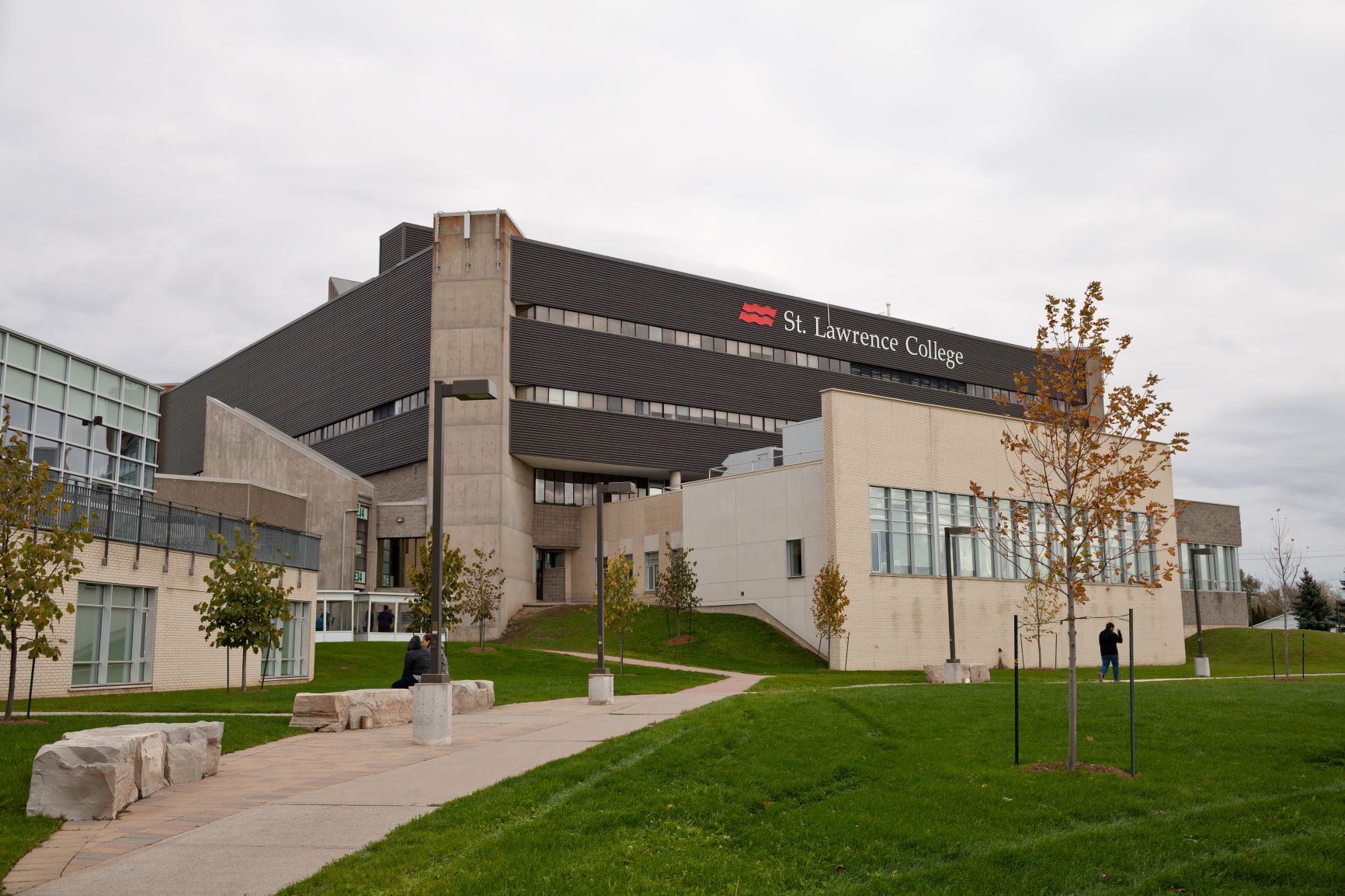
Our Kingston campus has seen significant renovation over the past few years, including a brand new Student Life and Innovation Centre that houses a new gymnasium, fitness centre, cafe, and more.

Career Opportunities
Veterinary Assistants are employed in a variety of animal care environments; these include veterinary clinics, animal shelters which may lead to a career in animal cruelty investigations, pet stores, research colonies, grooming salons, and wildlife facilities. Some Veterinary Assistant graduates choose to open their own businesses such as boarding kennels, dog daycares or pet sitting services.
St. Lawrence College Veterinary Assistants are an asset to any organization that require staff with strong work ethic, education and hands-on training.
Joan Tremblay, Veterinary Technician, Facility Manager, Queen’s University, Kingston
Testimonials
Other Information
The St. Lawrence College of Applied Arts and Technology (“St. Lawrence College”) is currently pursuing an amalgamation with The Sir Sandford Fleming College of Applied Arts and Technology (“Fleming College”), with a proposed effective date of April 1, 2027, subject to approval by the Ministry of Colleges, Universities, Research Excellence and Security. If the proposed amalgamation proceeds, students admitted to St. Lawrence College or Fleming College may ultimately study at, and receive their credential from, the amalgamated institution, which may have a different name than the institution to which they originally applied.